03 May 2015

Miniconference on Monday

The Mini-conference, in which generals papers writers present their work, will be Monday, May 4, in ILC N400 starting at 9:15. A schedule of talks follows.


9:15 Coffee
9:30  Ivy Hauser                   
          Dispersion (and lack thereof) in consonant inventories
10:00 Coral Hughto             
          Typological implications of an Interactive Learning Model
10:30-11:00 Break with refreshments
11:00  Caroline Andrews     
          Predictive parsing in long distance dependencies
11:30  Ekaterina Vostrikova         
          "Then" in conditionals
12:00  Sakshi Bhatia            
          Causation in Hindi-Urdu: Instruments and Subjects
12:30-1:15 Lunch break
1:15-1:45  Leland Kusmer
          Constituency paradoxes: Evidence from Akan
1:45-2:15 Jyoti Iyer
          Additive and exhaustive readings of Tamil particle -um

Call for papers: BUCLD

THE 40th ANNUAL BOSTON UNIVERSITY CONFERENCE ON LANGUAGE DEVELOPMENT

NOVEMBER 13-15, 2015

Join us for a special 40th anniversary meeting of the Boston University Conference on Language Development!  

Lila Gleitman (University of Pennsylvania), the keynote speaker of the very first BUCLD meeting, will reprise her role this year. We will also have a celebratory session looking back to where we've come from and where we're going as a field.

Any past presenters or attendees with photos from previous BUCLD events are encouraged to share them with the organizing committee at langconf@bu.edu.

CALL FOR ABSTRACTS

Submissions of abstracts for 20-minute talks and posters will be accepted beginning April 1 at: http://www.bu.edu/bucld/abstracts/abstract-submission/

DEADLINE.  All abstract submissions must be received by 8:00 PM EST, May 15, 2015.

Abstracts must be limited to 500 words, with one extra page for examples, figures, tables, and references. Submissions that present research on any topic in the fields of first and second language acquisition from any theoretical perspectives will be fully considered, including but not limited to: Artificial Languages, Bilingualism, Cognition & Language, Creoles & Pidgins, Dialects, Discourse and Narrative, Gesture, Hearing Impairment and Deafness, Input & Interaction, Language Disorders, Linguistic Theory, Neurolinguistics, Pragmatics, Pre-linguistic Development, Reading and Literacy, Signed Languages, Sociolinguistics, and Speech Perception & Production.

A suggested format and style for abstracts is available at:
http://www.bu.edu/bucld/abstracts/abstract-format

FURTHER INFORMATION

General conference information is available at:
http://www.bu.edu/bucld

Questions about abstracts should be sent to langconf@bu.edu.

Call for Papers: PSUxLing2

The Penn State Undergraduate Exhibition in Hispanic and General Linguistics is hosting their second annual undergraduate conference. Undergraduates are invited to submit an abstract for a poster to be presented in a two-hour poster session at Penn State University. The deadline for abstracts is May 15. You can learn more here.

Call for papers: TbiLLC 2015

On Septemer 22, the Eleventh International Tbilisi Symposium on Language, Logic and Computation will be hosting a workshop entitled: “How to make things happen in the Grammar — the implementation of Obligatoriness.”  The workshop is organized by our own Vincent Homer and Rajesh Bhatt. Talks are 45 minutes in length, and the two-page abstracts are due May 21, 2015. For more information, go here.

Grasping Ellipsis

May 4 and 5, Unicamp in Campinas, Sao Paulo, is hosting a “Grasping Ellipsis: its syntax, semantics, acquisition and processing. UMass is well represented:

UMass alumni Katy Carlson and Jesse Harris are giving the talk “Favoring a broad QUD in focus-sensitive coordination."

UMass alumnus and marathoner Satoshi Tomioka is giving the talk “Semantic definedness and a focus-semantic constraint on Ellipsis."

UMass faculty Kyle Johnson is giving the talk “Where’s Ellipsis?"

UMass student Nicholas LaCara is giving the talk “Ellipsis is not Spell-out: What Scandinavian tells us about ellipsis and phases."

Workshop on Copulas Across Languages

The program for the Workshop on Copulas Across Languages, which will be hosted by the University of Greenwich on June 18-19, has just been released and it includes several UMass linguists:

Alumnus Johannes Jonsson will be giving a talk with Ilja Hlin Gudhbjornsdottir, Rannveig Sverrisdottir and Kristin Lena Thorvaldsdottir, entitled “A sign language copula."

UMass student Tracy Conner will be giving the talk “Ellipsis Licensing and Constraints on Copula Optionality in African American English."

UMass faculty Lisa Green will be giving a plenary talk entitled “The Copula, Aspect, and Variation in African American English."

Trivia Answer

On March 1, WHISC posted the following trivia question, sent in by Angelika Kratzer:

Who wrote the following passage and when was it written?

Language, as I remarked earlier, is like seeing and hearing in that it can’t be taught or learned. Who has ever seen anybody teach language to a child? Some of you may have experienced how hopeless it is to teach language to children, as has been tried occasionally. I am sure that anybody who has ever had the opportunity to observe a child between the age of two and four was surprised about the sudden use of a word or a word form. We rarely know where the child got it from. The child grabbed it on some occasion or other; and grabbing means creating.  – We thus shouldn’t talk about learning of language by children. If there isn’t any teaching, there isn’t any learning either. What we do with children to lead them towards language is exactly what a gardener does with a seed from which he wants to produce a plant: we provide them with the necessary conditions for growth, namely human society. The gardener doesn’t truly make plants grow. Likewise, we do not teach children how to speak. A flower grows following the laws of nature. In the same way, language is generated in the consciousness of a child following the laws of the mind.

The answer is:

Heymann Steinthal: Abriss der Sprachwissenschaft (‘Fundamentals of Linguistics’), 1871.  

 
Here is the German:

Von der Sprache ist schon bemerkt, dass sie so wenig gelehrt und gelernt werden kann, wie Sehen und Hören. Wer hat wohl je bemerkt, dass man Kinder sprechen gelehrt hätte? Vielleicht aber hat Mancher schon beachtet, wie vergeblich das Bemühen ist, das man wohl zuweilen anstellt, das Kind zu lehren. Mit Gewissheit aber setze ich voraus, dass Jeder, wer Gelegenheit gehabt hat, ein Kind vom zweiten bis zum vierten Lebensjahre zu beobachten, oft genug darüber erstaunt war, wie urplötzlich das Kind ein Wort oder eine Wortform gebraucht hat. Selten weiss man, woher das Kind das hat. Es hat es ergriffen bei irgend einer Gelegenheit; und ergreifen heisst erzeugen. — Man sollte also gar nicht vom Lernen der Sprache bei Kindern reden. Denn wo keine Lehre, da ist kein Lernen. Nur was der Gärtner mit Samen tut, aus dem er Pflanzen ziehen will, nur das tun wir mit unsern Kindern, um sie zur Sprache zu bringen: wir bringen sie in die nötigen Bedingungen geistigen Wachstums, nämlich in die menschliche Gesellschaft. Aber so wenig der Gärtner wachsen macht, so wenig machen, lehren wir das Kind sprechen; nach dem Gesetze, dort der Natur, hier des Geistes, entsteht dort die Blume, hier die Sprache im Bewusstsein des Kindes.

26 April 2015

Seid Tvica speaks on Thursday

Seid Tvica, (University of Amsterdam) will give a talk this Thursday, April 30, at 12:20 in ILC: N451. A title and abstract follows.

Rich Agreement Hypothesis beyond Indo-European

It is well-established in the literature that many Germanic and Romance languages differ in the placement of adverbs, appearing either before or after the finite verb. This typological distinction is standardly accounted for via v-to-I movement, arguably triggered by the subject agreement features that are assumed to be located at I (cf. Roberts 1985; Kosmeijer 1986; Rohrbacher 1994; Vikner 1995;Bobaljik and Thráinsson 1998; Koeneman and Zeijlstra 2014, among many others). The observed correlation between the properties of agreement morphology and verb movement gave rise to the so-called “rich agreement hypothesis” (RAH) which, in its strong version, states thatin controlled environments the finite verb moves to a vP-external position if and only if the agreement morphology is rich (cf. Koenemanand Zeijlstra 2014). Building on the work done so far in this talk, I present the results of a typological investigation of RAH, showing that RAH holds across many languages, well beyond the Indo-European family. In particular, I will discuss verb movement in three unrelated non-Indo-European languages.

Diversity Linguistics

This weekend, the Max Planck Institute in Leipzig is hosting the conference “Diversity Linguistics: Retrospect and Prospect.” UMass is represented by David Erschler, who will be giving his paper “A universal on generalized sluicing.” For more information, go here.

The Three Rogers

Angelika Kratzer writes:

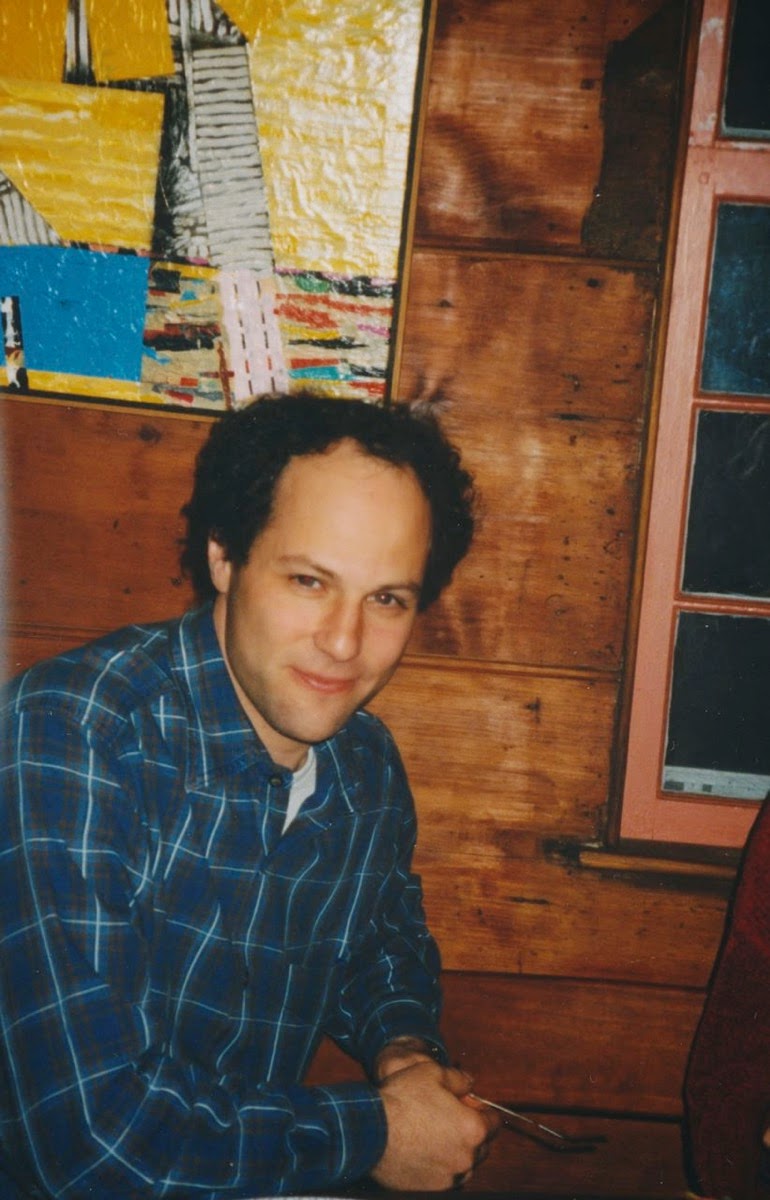
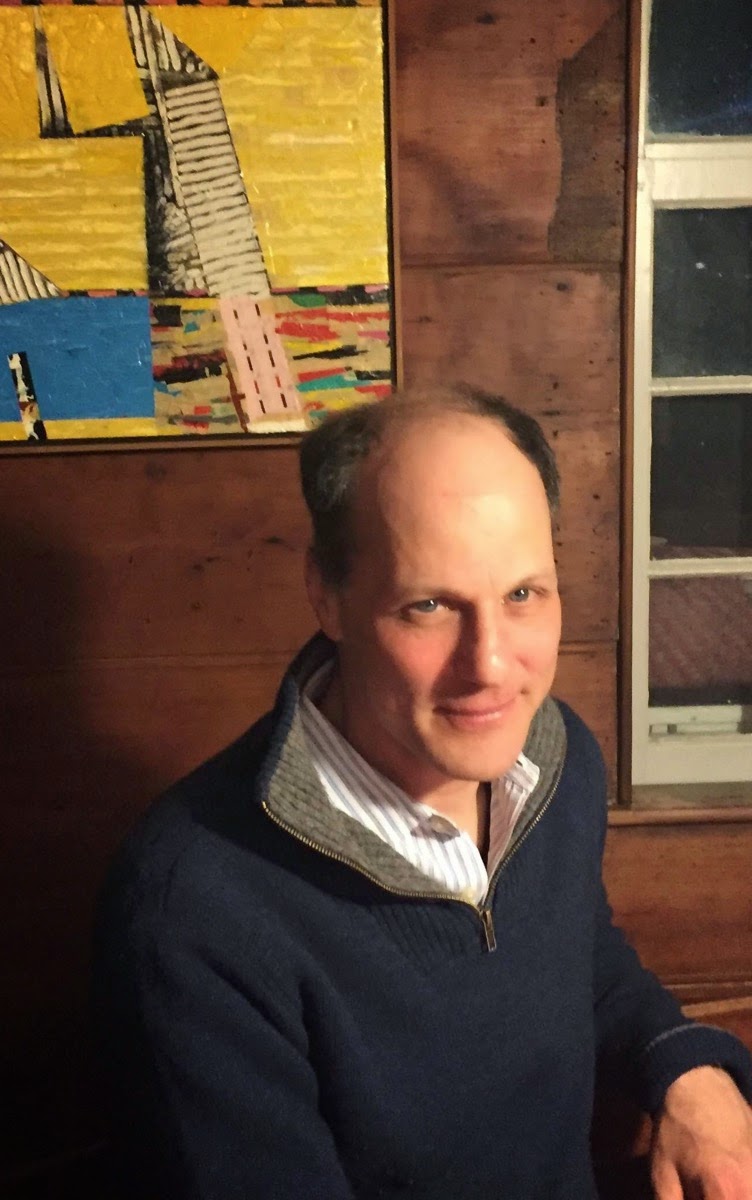
Every time Roger visits for a colloquium, we take a picture of him in front of the same painting in our kitchen. Here is the current series of 3: Roger-way-back-when, Roger-then, Roger-now. 

Roger way backRoger thenRoger now


Postdoc at Hebrew University

The Language, Logic and Cognition Center at the Hebrew University of Jerusalem (http://scholars.huji.ac.il/llcc) is looking for post-doctoral fellows. Earliest start date: Fall 2015. The positions are initially for one year, renewable for another year. The ideal candidate for a position is someone who already submitted their Phd dissertation, is working in syntax, semantics and/or formal pragmatics, and has an interest in experimental work. The fellow will be primarily a member of the LLCC but will also have an opportunity to interact extensively with members of the Department of Linguistics and the Safra Center for Brain Science (ELSC). Apart from contributing to the research environment of the LLCC and pursuing their own research, the fellow will have some (minor) local responsibilities. Pay: 7,500-10,500 NIS per month (Euro 1,750-2,400). Applicants should send a CV, a 1-page research statement, and a link to their publications to Luka Crnic (luka.crnic@mail.huji.ac.il) or to Yosef Grodzinsky (yosef.grodzinsky@mail.huji.ac.il), to whom all inquiries should be addressed.

GLOW 2015

The annual meeting of Generative Linguistics of the Old World met in Paris Wednesday through Saturday of last week, and UMass was represented by:

UMass alumnus Winnie Lechner, with coauthors Giorgos Spathas, Artemis Alexiadou and Elena Anagnostopoulou, presented their paper “On deriving the typology of repetition and restitution."

UMass students Stefan Keine and Ethan Poole presented their paper “Intervention in tough-constructions."

UMass alumnus Keir Moulton, with Nino Grillo, presented their paper “Mismatching Pseudo-Relatives Describe Event Kinds."

UMass citizens Coral Hughto, Joe Pater and Robert Staubs presented their paper “Grammatical agent-based modeling of typology."

UMass prospective faculty Gaja Jarosz presented her paper “Phonotactic probability and sonority sequencing in Polish initial clusters."

Tom Ernst was also in attendance at the States/Events Workshop on the last day of the conference. You can learn more here.

Workshop on Altaic Formal Linguistics

The program for the eleventh Workshop on Altaic Formal Linguistics has been announced. The Workshop will be at the University of York on June 4-6. UMass is represented by Deniz Ozyildiz, who is presenting the paper "Move to mI, but only if you can."

UConn Workshop for Irene Heim

The UConn Logic group has its annual workshop on May 2-3. Each year their workshop is dedicated to the work of a single person, and this year they're honoring Irene Heim. The workshop is announced here: http://logic.uconn.edu/workshop/

Saturday, May 2

9-10:30 Barbara PARTEE (UMass) Irene Heim in the History of Formal Semantics (Invited) 

10:30-11:35 Lucas CHAMPOLLION (NYU) The weak/strong ambiguity in donkey sentences cannot be explained away. 

11:50-1:20 Thomas Ede ZIMMERMANN (Frankfurt) Type-shifting and the proportion problem (Invited) 

2:30 - 3:35 Paul DEKKER (Amsterdam) Indexical Inference 

3:35 - 4:40 Matthew MANDELKERN (MIT) Taking things for granted (Graduate Student Prize) 

4:55 - 6:25 Hans KAMP (Stuttgart/Texas) Presuppositions after 1983 (Invited) 

Sunday, May 3

9 - 10:30  David BEAVER (Texas) “The X” files (Invited) 

10:30 - 12  Simon CHARLOW (Rutgers) The scope of alternatives (Invited) 

12:15 - 1:45 Irene HEIM (MIT) Keynote

19 April 2015

Kaufmann gives first department colloq on Tuesday

Magdalena Kaufmann (UConn) will give a department colloquium on Tuesday, April 21, at 4:00 in N400. The title and abstract of her talk follows.

Embedded imperatives: venturing into the cross-linguistic picture

Many languages are taken to have grammatical marking of imperative clauses (verbal morphology, clause type particles). For a long time, the standard assumption had been that such markers cannot occur in embedded sentences  ("Imperatives cannot be embedded"). More recent research has discovered a series of counter-examples to this generalization. At the same time, it remains to be acknowledged that embedding is severely restricted cross-linguistically. Building on, and extending, what I discussed in Kaufmann (2012, ch. 6.1), I investigate patterns in the exceptions to the putative ban on embedded imperatives. I focus on data from English, German, Japanese, Korean, and Slovenian (specifically, the interpretation of the imperative subject), and I suggest an account in terms of clashes between shiftable (in the sense of Schlenker 2003) and unshiftable indexicality. While the talk will focus mostly on imperatives in reported speech, I will discuss some connections to imperative marking in relative clauses and in matrix wh-sentences.

Schwarzschild gives second department colloq

Roger Schwarzschild (MIT) will give the second department colloquium this week on Friday, April 24, at 3:30 in N400. The title of his talk is “The Paradox of Mass Plurals,” and an abstract follows.

The nouns used in (1) below are 'lexical plurals'.

(1) He keeps the *books*
     He gave me bad *directions*.

They contrast with the plurals in (2) below:

(2)  He bought two books.
       They went in two different directions.

Other examples of lexical plurals are *coffee-grounds, proceeds, measles,canned-goods, remains, special effects, dregs, fumes*

I adopt the split analysis of plurality (Acquaviva 2008, Lowenstamm 2008, Alexiadou 2011, Kramer 2012) according to which the plural [*s*] in (1) is the realization of n[+PL], a morpheme that nominalizes category-neutral roots.  The [*s*] in (2) is the realization of Num[+PL].  The plurals in (1) and (2) do not block one another, since they are formed from different pieces (compare:  irregular *men* which blocks **mans*).   The meanings of lexical plurals are idiosyncratic -- a common feature of words formed from roots, noted by the above cited references. But problems remain.

Lexical plurals are always mass nouns.  Assuming there is some semantic basis to the mass/count distinction, the meanings of lexical plurals are predictable *to some extent* and that needs to be explained.  Moreover, this feature of lexical plurals is not a peculiarity of English. Ojeda (2005), from whom the title of this talk was borrowed unchanged, provides examples of 'mass plurals' in Zuni and in Lingala (Bantu).  He further records that "according to Welmers (1973, 159), there is a semantic correlation in the large Bantu family between being a noun that denotes masses or liquids and being a noun that belongs to the plural Class 6.” (see also Taraldsen 2010:fn8 on Nguni). These then are the questions I'll address:

Q1 Why does the combination of a root and n[+PL] produce a mass noun?

Q2 What, if anything, is plural about the meanings of these nouns?

Q3 Assuming that the idiosyncratic meanings of lexical plurals are encoded in the root, how do we guarantee that this meaning *only*surfaces in the presence of n[+PL] (rather than in any syntactic context that requires a mass meaning)?

  - Following Schwarzschild (2011), I'll argue that simple nouns are  predicates of states. This will allow for two kinds of pluralization,  within a state and among states, corresponding to inner, n[+PL] and outer  Num[+PL] plurals. 

- Next, I'll argue that a state is in the extension of a count noun only  if it is a state with a single participant. It follows, that n[+PL] are non-count.  And, given certain mereotopological assumptions about liquids (Grimm 2012), it will follow that liquid nouns must denote multi-participant states -- hence are candidates for n[+PL] marking.

- Finally Q3 has to do with a correlation between word meaning and  morpho-syntactic context. I'll propose a way to tie these two together  using ideas from Artstein (2004) about focus below the word level.

Ming Xiang speaks on Wednesday

Ming Xiang (University of Chicago)  will talk on  "The memory structure of covert dependencies” on Wednesday, April 22, at 5:30 in N400. An abstract of her talk follows.

While modeling the cross-linguistic structural variation, linguistic analysis often postulates abstract “covert” representations that do not have any morpho-phonological reflexes in the surface word string. Little is known as to whether such representations are actually constructed in language comprehension and production. In this talk, I will examine the processing of Mandarin wh-in-situ questions, which share the same word order with regular declarative sentences but  have a semantics identical to their English counterpart wh-questions. Drawing on data from production, eyetracking-reading, and speed-accuracy tradeoff paradigms, I will address two questions: (i) Does the parser construct a covert non-local syntactic dependency in processing? (ii) What are the parsing mechanisms that support such non-local dependencies? How similar/different are they from the processing of overt non-local dependencies?

Caroline Andrews in Psycholing Workshop

Shayne Sloggett writes:

This week we'll be hearing from Caroline Andrews in the Psycholing workshop. She will be presenting on her first GP in preparation for the second year mini conference in a few weeks. The title of her talk is "Predictive Parsing in Licensor-Licensee Dependencies".

As usual for afternoon meetings, we'll be convening at 2:30 on Thursday in N400. 

Bogal-Allbritten at Maryland

Elizabeth Bogal-Allbritten will be presenting a portion of her dissertation research at the University of Maryland this coming Tuesday as a guest speaker at a meeting of their S-Lab group. The talk is titled ‘Building attitudes of belief and desire in Navajo.’

The 2015 entering graduate class

WHISC is pleased to announce next year’s entering graduate class. They are:

Carolyn Anderson graduated from Swarthmore in 2014 with interests in formal semantics and fieldwork, having worked on Moroccan Arabic and Zapotec. She is currently a Fulbright Fellow in Canada, working on the use of technology in fieldwork and the ethics of fieldwork.

Alex Goebel comes to us from Tübingen University. He has worked in the syntax-semantics interface but has broad interests, especially in cognitive linguistics. Alex has also studied philosophy and through that developed an interest in modals.

Chris Hammerly has recently learned that he won an NSF Fellowship. He majored in linguistics and psychology at the University of Minnesota Twin Cities, graduating in 2014. He is currently a Baggett Fellow at the University of Maryland doing research in psycholinguistics. Chris is also part Ojibwe and is interested in learning the language.

Jaieun Kim majored in economics at Sogang University in South Korea, and completed an M.A. in linguistics there in 2014. She was also a visitor at the University of Hawaii for a year. She plans to work on syntax, the acquisition of syntax, and psycholinguistics, and her interests include comparing acquisition across languages.

Brandon Prickett is interested in experimental phonology and in computational models of phonological learning. He has graduated from the University of North Carolina, Chapel Hill, and will soon complete his M.A. there.

Michael Wilson studied linguistics and Spanish at the University of Texas at Austin. At UMass he will work on experimental methods in lexical semantics and syntactic alternations, as well as in theoretical syntax and semanics.

Rong Yin did her undergraduate work in English at Nankai University in China, then came to the U.S., where she completed an M.A. in linguistics at Syracuse University. She wants to work on syntax and semantics and is interested in fieldwork and in statistical tools.