Showing posts with label colloquiums. Show all posts

10 April 2016

David Pesetsky gives department colloquium

David Pesetsky (MIT) will give the department colloquium on Friday, April 15, at 3:30 in ILC N400. The title of his talk is “Exfoliation: towards a derivational theory of clause size.” An abstract follows.

We too easily become used to facts about language that should strike us as strange. One of these is the menagerie of clause-types and clause-sizes in the world's languages categorized with ill- understood labels such as finite, non-finite, full, reduced, defective, and worse. For almost a half-century, the standard approach to these distinctions has treated them as a consequence of lexical choice — a legacy of arguments by Kiparsky & Kiparsky (1970) and Bresnan (1972), who showed (1) that verbs that select a clausal complement select for the complementizer and finiteness of that complement, and (2) that finiteness and complementizer choice have semantic implications. In an early-1970s model of grammar in which selection and semantic interpretation were properties of Deep Structure, these discoveries directly entailed the lexicalist view of clause type that is still the standard view today. So compelling was this argument at the time, that its 1960s predecessor (Rosenbaum 1967) was all but forgotten — the idea that distinctions are derivationally derived as the by-product of derivational processes such as Raising. As a consequence, it has gone unnoticed that in a modern model of grammar, where structure is built by Merge (and both selection and semantic interpretation are interspersed with syntactic operations), the arguments against the derivational theory no longer go through.

In this talk, I present a series of arguments for a modernized return to a derivational theory. I argue that a reduced clause is the response to specific situation: a clause-external probe that has located a goal such as the subject in the upper phase of its CP-complement, when that goal does not occupy the edge of its CP. Since anti-locality prevents that goal from moving to the clausal edge (Erlewine 2015 and predecessors), a last-resort operation called Exfoliation deletes outer layers of the clause until the goal occupies the edge without movement. If the goal was a subject occupying a low enough position, the result is an infinitive. If the goal occupied a higher position, the result is a finite clause missing its complementizer. My starting point is the paradigm in (a)-(d). Because a standard approach assumes that every infinitive is born infinitival, the contrast between (a) and (b) is usually treated as a puzzle of case theory: why does moving the subject in (b) eliminate its case problem visible in (a)? The derivational approach invites an entirely different question: why should the embedded clause in (a) be infinitival in the first place? Since no probe targets the embedded subject in (a), Exfoliation should not have taken place, and the clause should have remained finite (I assure you that Mary is the best candidate). Only in (b), where an Ā-probe has targeted the embedded subject, is Exfoliation justified, hence the possibility of an infinitive. Example (c) also shows Exfoliation, deleting only the complementizer because the subject is higher than in (b), and (d) is impossible because no Exfoliation took place — thus explaining the that-trace effect as part of the same paradigm.

a. *I assure you Mary to be the best candidate.

b. Mary, who I assure you __ to be the best candidate. (Kayne 1983)

c. Mary, who I assure you __ is the best candidate.

d. *Mary, who I assure you that __ is the best candidate.

Similar effects with A-movement arise in the behavior of English wager-class predicates and raising in Lusaamia (Carstens & Diercks 2014), as well as with other Ā-phenomena such as anti- Agreement (Baier 2015). Finally, I provide an independent argument for the last-resort nature of Exfoliation from Zulu Hyper-Raising, based on a simplified version of a proposal by Halpert (2015).

03 April 2016

Kathryn Davidson gives department colloq

Kathryn Davidson (Harvard) will give the department colloquium on Friday, April 8 at 3:30 in ILC N400. A title and abstract of her talk follow.

Title:
Combining imagistic and discrete components in a single proposition: The case of sign language classifier predicates

Abstract:
Classifier predicates in sign languages (also known as "depicting verbs") have both discrete and imagistic components: they participate fully in the grammar as verbs and involve categorical handshapes that agree with the subject, but also have an obligatory "gestural" component that psycholinguistic experiments have shown are interpreted in an analog and iconic way. Understanding how to treat these verbs in a formal semantic system is therefore a challenge. In this talk I will draw parallels with work on quotation and attitude reports to introduce an analysis of classifier predicates involving the notion of an iconic "demonstration of events". I will also present corpus data from bimodal (sign/speech) bilingual blended utterances that sheds light on the syntax/semantics of classifier predicates. Finally, I will discuss extensions of this analysis of classifier predicates to formal semantic analyses of gesture.

20 March 2016

Amy Rose Deal gives department colloquium

Amy Rose Deal (UC, Berkeley) will give the department colloquium on Friday, March 25 at 3:30 in ILC N400. A title and abstract of her talk follow.

Title:

Shifty asymmetries: toward universals and variation in shifty indexicality

Abstract:

Indexical shift is a phenomenon whereby indexicals embedded in speech and attitude reports depend for their reference on the speech/attitude report, rather than on the overall utterance. For example, in a language with indexical shift, "I" may refer to Bob in a sentence like "Who did Bob think I saw?". The last 15 years have seen an explosive growth in research on indexical shift cross-linguistically. In this talk, I discuss three major generalizations that emerge from this work, and present a theory that attempts to explain them. The account that I develop concerns the syntax of indexical shift along with its semantics, and has consequences for the linguistic encoding of attitudes de se. Throughout the talk I will exemplify indexical shift primarily, though by no means exclusively, with data from original fieldwork on Nez Perce.

29 November 2015

Jon Sprouse gives department colloq

Jon Sprouse (UConn) will give the department colloquium at 3:30 on Friday, December 4, in ILC 400. A title and abstract will be posted here when they become available.

18 October 2015

Job at Yale

Claire Bowern writes:

The Department of Linguistics at Yale University is seeking to make a tenure-track appointment at the level of Assistant or Associate Professor (without tenure) to begin in Fall 2016.  The area of specialization is open and full consideration will be given to candidates in all areas, but we are particularly interested in candidates in phonetics/experimental phonology and semantics/pragmatics.  Special consideration will be given to candidates whose scholarly interests complement and connect with those of the current department faculty and other departments and research units at Yale. Evidence of successful teaching at both the undergraduate and graduate levels will also be taken into consideration in making an appointment. Candidates should be assured of completing the requirements for the Ph.D. by the summer of 2016 at the latest.

The application will need to include a current CV, a research statement outlining the candidate's research program, evidence regarding teaching qualifications, and two or three representative pieces of research. Applicants should also arrange for three letters of reference to be submitted to this website. To ensure full consideration, applications should be submitted by November 15, 2015.  We expect to interview potential candidates at the annual meeting of the Linguistic Society of America in Washington, DC in January 2016 (though attendance at that meeting is not a requirement for consideration).

For more information, go here: http://apply.interfolio.com/31809

20 September 2015

Ashwini Deo gives department colloquium on Friday

Ashwini Deo (Yale) will give the department’s first colloquium of the semester this Friday, September 25, at 3:30 in ILC N400. The title and abstract of her talk follow.

Title: The Semantic and Pragmatic underpinnings of Grammaticalization Paths

It is a well-established fact that meanings associated with functional linguistic expressions evolve in systematic ways across time. But we have little precise understanding of why and how this happens. We know even less about how formal approaches to the meanings of functional categories like tense, aspect, negation can be reconciled with the typologically robust findings of grammaticalization research. In this talk, I will take a first step towards such an understanding by analyzing a robustly attested semantic change in natural languages — the progressive-to-imperfective shift.

The facts can be described as follows: At Stage 0, a linguistic system L possesses a single imperfective or neutral aspectual marker X that is used to express two contextually disambiguable meanings α and β. At Stage 1, a progressive marker Y arises spontaneously in L in order to express α in some contexts. At Stage 2, Y becomes entrenched as an obligatory grammatical element for expressing α while X is restricted in use to expressing β. At Stage 3, Y generalizes and is used to express both α and β. X is gradually driven out of L. Stage 3 (structurally identical to Stage 0) is often followed by another instantiation of Stage 1, with the innovation of a new progressive marker Z. The trajectory to be explained is thus cyclic. The analysis I provide has a semantic component that characterizes the logical relation between the progressive and imperfective operators in terms of asymmetric entailment. Its dynamic component rests on the proposal that imperfective and progressive sentences crucially distinguish between two kinds of inquiries: phenomenal and structural inquiries (Goldsmith and Woisetschleger 1982). The innovation and entrenchment of progressive marking in languages is shown to be underpinned by optimal ways of resolving both kinds of inquiries in discourse given considerations of successful and economic communication. Generalization is analyzed as the result of imperfect learning. The trajectory — consisting of the recruitment of a progressive form, its categorical use in phenomenal inquiries, and its generalization to imperfective meaning — is modeled within the framework of Evolutionary Game Theory. 

13 September 2015

Department colloqs schedule announced

Katerina Vostrikova and Stefan Keine write:

GLSA is excited to announce the colloqs schedule for this semester:

Ashwini Deo September 25

Howard Lasnik November, 13

Laura McPherson November, 20

Jon Sprouse December, 4

26 April 2015

The Three Rogers

Angelika Kratzer writes:

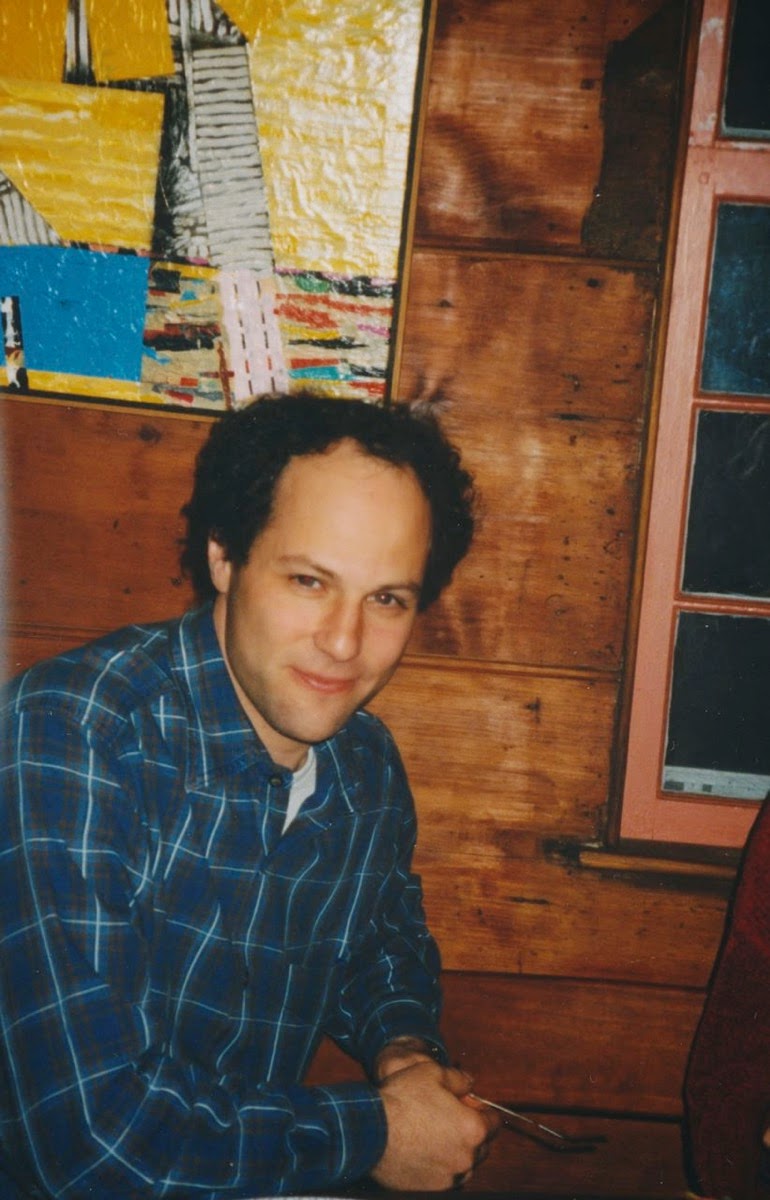
Every time Roger visits for a colloquium, we take a picture of him in front of the same painting in our kitchen. Here is the current series of 3: Roger-way-back-when, Roger-then, Roger-now. 

Roger way backRoger thenRoger now


19 April 2015

Kaufmann gives first department colloq on Tuesday

Magdalena Kaufmann (UConn) will give a department colloquium on Tuesday, April 21, at 4:00 in N400. The title and abstract of her talk follows.

Embedded imperatives: venturing into the cross-linguistic picture

Many languages are taken to have grammatical marking of imperative clauses (verbal morphology, clause type particles). For a long time, the standard assumption had been that such markers cannot occur in embedded sentences  ("Imperatives cannot be embedded"). More recent research has discovered a series of counter-examples to this generalization. At the same time, it remains to be acknowledged that embedding is severely restricted cross-linguistically. Building on, and extending, what I discussed in Kaufmann (2012, ch. 6.1), I investigate patterns in the exceptions to the putative ban on embedded imperatives. I focus on data from English, German, Japanese, Korean, and Slovenian (specifically, the interpretation of the imperative subject), and I suggest an account in terms of clashes between shiftable (in the sense of Schlenker 2003) and unshiftable indexicality. While the talk will focus mostly on imperatives in reported speech, I will discuss some connections to imperative marking in relative clauses and in matrix wh-sentences.

Schwarzschild gives second department colloq

Roger Schwarzschild (MIT) will give the second department colloquium this week on Friday, April 24, at 3:30 in N400. The title of his talk is “The Paradox of Mass Plurals,” and an abstract follows.

The nouns used in (1) below are 'lexical plurals'.

(1) He keeps the *books*
     He gave me bad *directions*.

They contrast with the plurals in (2) below:

(2)  He bought two books.
       They went in two different directions.

Other examples of lexical plurals are *coffee-grounds, proceeds, measles,canned-goods, remains, special effects, dregs, fumes*

I adopt the split analysis of plurality (Acquaviva 2008, Lowenstamm 2008, Alexiadou 2011, Kramer 2012) according to which the plural [*s*] in (1) is the realization of n[+PL], a morpheme that nominalizes category-neutral roots.  The [*s*] in (2) is the realization of Num[+PL].  The plurals in (1) and (2) do not block one another, since they are formed from different pieces (compare:  irregular *men* which blocks **mans*).   The meanings of lexical plurals are idiosyncratic -- a common feature of words formed from roots, noted by the above cited references. But problems remain.

Lexical plurals are always mass nouns.  Assuming there is some semantic basis to the mass/count distinction, the meanings of lexical plurals are predictable *to some extent* and that needs to be explained.  Moreover, this feature of lexical plurals is not a peculiarity of English. Ojeda (2005), from whom the title of this talk was borrowed unchanged, provides examples of 'mass plurals' in Zuni and in Lingala (Bantu).  He further records that "according to Welmers (1973, 159), there is a semantic correlation in the large Bantu family between being a noun that denotes masses or liquids and being a noun that belongs to the plural Class 6.” (see also Taraldsen 2010:fn8 on Nguni). These then are the questions I'll address:

Q1 Why does the combination of a root and n[+PL] produce a mass noun?

Q2 What, if anything, is plural about the meanings of these nouns?

Q3 Assuming that the idiosyncratic meanings of lexical plurals are encoded in the root, how do we guarantee that this meaning *only*surfaces in the presence of n[+PL] (rather than in any syntactic context that requires a mass meaning)?

  - Following Schwarzschild (2011), I'll argue that simple nouns are  predicates of states. This will allow for two kinds of pluralization,  within a state and among states, corresponding to inner, n[+PL] and outer  Num[+PL] plurals. 

- Next, I'll argue that a state is in the extension of a count noun only  if it is a state with a single participant. It follows, that n[+PL] are non-count.  And, given certain mereotopological assumptions about liquids (Grimm 2012), it will follow that liquid nouns must denote multi-participant states -- hence are candidates for n[+PL] marking.

- Finally Q3 has to do with a correlation between word meaning and  morpho-syntactic context. I'll propose a way to tie these two together  using ideas from Artstein (2004) about focus below the word level.

12 April 2015

Michael Wagner gives department colloquium

Michael Wagner (McGill University) gives the department colloquium this Friday (April 17) at 3:30 in N400. The title and abstract are below.
 
Additivity and the syntax of 'even'
 
Beaver & Clark (2003, 2010) observe that certain focus operators such as ‘only' and ‘even' differ in various ways from focus sensitive operators such as 'always'. This talk presents analysis that derives at least some of these differences from a difference in their syntax: ‘only' takes two syntactic arguments, a focus constituent which can be of any type, and a second argument, which has to compose with the first to form a proposition (following similar syntactic proposals in Rooth 1985, Mccawley 1995, Krifka 1996). The distribution of ‘only' is further constrained by a constraint that assures that the size of the focus constituent must minimized (potentially motivated semantically, as proposed in Wagner 2006). Adverbs like ‘always', by contrast, operate over a single argument. 
 
A challenges to this view is the syntax of ‘even', which seem to place it between the two categories of focus operators. We can get a better understanding of the syntax of ‘even' once we control for whether ‘even' is used additively or not. Whether ‘even’ carries an additive presupposition remains controversial. While Horn (1969), Karttunen and Peters (1979), Wilkinson (1996) and many others have argued that it does, Stechow (1991), Krifka (1992) and Rullmann (1997) reached the opposite conclusion. This talk identifies a new syntactic generalization about when ‘even' triggers an additive presupposition, which provides further evidence for the analysis of the syntax of focus operators advocated here. It also reconciles the contradictory findings about additivity in the earlier literature.  The analysis offers a new perspective on syntactic constraints on the distribution of related focus operators in German noted in Jacobs (1983) and Büring & Hartmann (2001). 

30 March 2015

Larry Hyman gives department colloq

Larry Hyman will give the department colloquium on Friday, April 3, at 3:30 in N400. The title of his talk is “Multiple argument marking in Bantoid,” and an abstract follows.

Given the typological similarities between the geographically and genetically distant Atlantic, Kordofanian and (Narrow) Bantu languages, it is generally assumed that early Niger-Congo had a synthetic structure with extensive noun class marking and derivational verb extensions (causative, applicative, etc.). However, other Niger-Congo languages show varying degrees of analyticity, some coming close to the endpoint of one morpheme per word. Much of the variation is quite clearly areal. In this paper I am concerned both with the mechanisms of change that lead from syntheticity to analyticity in the Nigeria-Cameroon borderland area, as well as the different strategies that are adopted as these languages lose their verbal extensions. The Bantoid languages I report on are typologically quite diverse. I am particularly concerned with what has replaced dative (recipient, benefactive) and instrumental applicative marking on verbs which historically allowed multiple object noun phrases (send-APPL chief letter, cook-APPL child rice, cut-APPL knife meat). The languages of this area show a remarkable variation: (i) Some languages allow multiple objects (typically with restrictions), while others do not (including some which have relic verb extensions); (ii) some have replaced verb extensions with serial verbs (take knife cut meat give child), others use adpositions (cut meat with knife for child). Still others have adopted multiple strategies for marking such arguments. In this study I sort out these strategies and attempt a micro-mapping of who has developed what where—and grammaticalizing from what (nouns? verbs?)? I will show that even adpositional languages have extensive verb serialization which they exploit for other functions (aspectual, directional, comparatives etc.), thereby raising the question of why only some Bantoid languages use serial verbs for argument marking. Although information is lacking for many languages, there does appear to be a southerly band of languages which mark datives and instruments with serial verbs. Information from Nigeria suggests that a similar distinction separates much of Lower Cross-River from Upper Cross River languages as well.

08 March 2015

Gaja Jarosz visits the department

Gaja Jarosz will be visiting the department this Thursday and Friday. She’ll give the department colloquium (title and abstract below) on Friday at 3:30 in ILC N400.

Sonority Sequencing Effects in Polish: Defying the Stimulus?

The Sonority Sequencing Principle (SSP: Steriade 1982; Selkirk 1984; Clements 1988, 1992) states that syllables with a sonority rise in the transition from the onset to the nucleus are preferred cross-linguistically. Experimental evidence indicates that English speakers exhibit gradient sensitivity to the SSP for onset clusters that are not attested in English (Davidson 2006, 2007; Berent et al. 2007, 2009; Daland et al. 2011). Berent et al. (2007, 2009) show that several lexical statistics of English fail to predict these preferences and suggest that the principle may therefore be innate. However, Daland et al. (2011) show that computational models with the ability to form abstract generalizations on the basis of phonological features and phonological context can detect SSP preferences on the basis of English lexical statistics. In this talk, I explore this controversy using computational and developmental approaches in a language (Polish) with very different sonority sequencing patterns from English. Using computational modeling, I show that a) the lexical statistics of Polish contradict the SSP, b) computational models applied to input estimated from Polish child-directed speech predict reverse-SSP preferences, and c) computational models that encode the SSP straightforwardly predict earlier acquisition of clusters with higher sonority rises. Thus, Polish provides a rare example where predictions of input-based models, even phonologically sophisticated ones, diverge dramatically from predictions expected on the basis of universal principles. I test these predictions by examining the acquisition of onset clusters in Polish. The data come from the spontaneous speech of four typically-developing, monolingual, Polish children aged 1;7-2;6 in the Weist-Jarosz Corpus (Weist and Witkowska-Stadnik 1986; Weist et al. 1984; Jarosz 2010; Jarosz et al. submitted). In conflict with the input-based predictions, the acquisition analyses indicate that development is significantly and gradiently sensitive to the SSP. I discuss the implications for phonological theory.

01 March 2015

Eric Bakovic visits department

Eric Bakovic will be visiting the department Thursday and Friday. He will be giving the department colloquium on Friday at 3:30 in N400. The title of his talk is "Ensuring the proper determination of identity: a model of possible constraints.” An abstract follows.

Some phonological patterns can be described as sufficient identity avoidance, where 'sufficiently identical' means 'necessarily identical with respect to all but some specific feature(s)'. The first part of the talk addresses this question: why are specific features ignored for the purposes of determining sufficient identity? In previous work (Bakovic 2005, Bakovic & Kilpatrick 2006, Pajak & Bakovic 2010, Brooks et al. 2013ab), we have found that patterns of sufficient identity avoidance where a specific feature F is ignored also involve F-assimilation in the same contexts. Direct reference to sufficient identity is thus unnecessary: sufficient identity is indirectly avoided because F-assimilation would otherwise be expected, resulting in total identity. Avoiding sufficient identity without assimilation is the better option, as predicted by the minimal violation property of Optimality Theory. This analysis predicts rather than stipulates the features that will be ignored for the purposes of determining sufficient identity. (Several corollary consequences of the analysis will also be discussed in the talk.) The explanatory value of the analysis, however, is predicated on the absolute non-existence of constraints directly penalizing all-but-F identity, which could be active independently of F-assimilation. The second part of the talk addresses this question: how can such constraints be ruled out formally? I propose a deterministic model of constraint construction and evaluation that results in just the types of constraints necessary for the analysis above. More broadly, the proposed model is intended as a contribution to our formal understanding of what a 'possible constraint' is.

22 February 2015

Kie Zuraw visits department

Kie Zuraw (UCLA) will be visiting the department this week. She will give the department colloquium on Friday, February 27, at 3:30 in N400. A title of her abstract follows.

Polarized Variation

The normal distribution--the bell curve--is common in all kinds of data, and is often expected when the quantity being measured results from multiple independent factors. The distribution of phonologically varying words, however, is sharply non-normal in the cases examined in this talk (from English, French, Hungarian,Tagalog, and Samoan). Instead of most words' showing some medial rate of variation (say, 50% of a word's tokens are regular and 50% irregular), with smaller numbers of words having extreme behavior, words cluster at the extremes of behavior--that is, a histogram of exceptionality rates is shaped like a U (or sometimes J) rather than a bell.  The U shape cannot be accounted for by positing a binary distinction with some amount of noise over tokens, because some items (though the minority) clearly are variable, even speaker-internally. In some cases (e.g., French "aspirated" words) there is a diachronic explanation: sound change caused some words to become exceptional, so that the starting point for today's situation was already U-shaped. But in other cases, such an explanation is not available, and items seem to be attracted towards extreme behavior.

Two mechanisms for deriving U-shaped distributions will be presented, with some speculation as to why some distributions of variation are U-shaped and others bell-shaped.

15 February 2015

Gillian Gallagher gives department colloq

Gillian Gallagher (NYU) will give the department colloquium this Friday, February 20, in the colloq room (N400) at 3:30. A title and abstract of her talk follows.

Natural classes in phonotactic learning

The core representational unit in phonology is the feature, used to  define contrasts between sound categories (/i/ and /e/ are  distinguished by [±high]) and to pick out classes of sounds that  pattern together in the phonology ([+high] vowels may be restricted  from final position in some languages). Traditionally, phonological  features are thought to bear a direct relation to phonetic properties  (Jakobson, Fant & Halle 1952; Chomsky & Halle 1968). Under more recent  proposals, though, features are labels for phonologically active  classes that may bear a loose or no relation to the phonetics of the  sounds in question (Mielke 2008). In this talk, I present evidence  that phonetics plays a direct role in the natural classes used in the  phonological grammar.

The cooccurrence phonotactics of Quechua provide evidence for natural  classes grouping aspirated stops with the glottal fricative [h], and  grouping ejective stops with the glottal stop [?]. In addition to  being phonologically active, both of these classes are phonetically  definable based on articulatory properties of the glottis: [spread  glottis] picks out aspirates and [h], [constricted glottis] picks out  ejectives and [?]. Despite the phonological and phonetic support, two  nonce word tasks fail to find evidence for these natural classes in  speakers' grammars. Instead, aspirate and ejective stops seem to be  targeted by the phonotactics to the exclusion of their glottal  counterparts. It is proposed that the preference for these smaller  classes of laryngeally marked stops is phonetically based, deriving  from the salience of the acoustic properties unique to stops.

01 February 2015

Julie Legate gives department colloq

Julie Legate (University of Pennsylvania) will give the department colloquium Friday, February 6, at 3:30 in ILC N400. The title of her talk is “Restrictive Phi in a Partial Typology of Noncanonical Passives,” and an abstract follows.

In this talk, I investigate the syntactic structure of noncanonical passives, focusing on the role played by phi-features that restrict rather than saturate the external argument position. Building on previous work by myself and others, I show that voice is encoded in a functional projection, VoiceP, which is distinct from, and higher than, vP. I demonstrate that microvariations in the properties of VoiceP and in the location of restrictive phi-features explain a wide range of noncanonical passives, including agent-agreeing passives, restricted agent passives, accusative object passives, impersonals, and object voice. The analysis draws on data from a typologically diverse set of languages.

16 November 2014

Martin Hackl gives department colloq on Friday

Martin Hackl (MIT) will give the department colloquium on Friday, 3:30, in the seminar hub. The title of his talk is: On the Acquisition and processing of “only”: Question Answer Congruence, Scalar Presupposition, and the Structure of ALT(S). An abstract follows.

In this talk, which is based on ongoing joint work with Ayaka Sugawara, Erin Olson, and Ken Wexler, I will suggest an approach to understand a curious phenomenon concerning the acquisition of only. As Crain et al. (1992, 1994) showed, children up to at least age six display a surprisingly robust rate of assigning non-adult interpretations to sentences with subject only. For instance, children may judge Kermit’s answer in (1a) to the question Kermit, can you tell me what happened? as true relative to a scene where a cat is holding a flag, a goose is holding a flag and a balloon, and a frog is holding a balloon. Moreover, when asked why they think Kermit was correct, they offer justifications indicating that they assigned (1a) an interpretation as in (1b).

(1) What happened?

a. Only the cat is holding a flag.

b. The cat is only holding a flag.

Crain et al.’s results have been replicated since for a number of languages including German, Japanese, and Mandarin suggesting that at least some the factors at play operate on properties of sentences with only that are invariant across languages. I will argue, based on results from a series of experiments with children and adults, for three such factors – A. Question-Answer Congruence, B. the scalar presupposition of only, and C. the nature of the set of alternatives, ALT(S), relevant for the interpretation of only – and propose a simple comprehension model for sentences with only that offers a principled characterization of when sentences with only are relatively easy or relatively difficult to comprehend.

19 October 2014

Omer Preminger gives department colloquium

Omer Preminger (University of Maryland) will give the department colloquium at 3:30 on Friday, October 24, in the seminar hub (ILC N400). The title of his talk is “The syntax (and morphology) of non-valuation.” An abstract follows.

First, I review recent work showing that for several classes of features, what was traditionally thought of as one member in a set of possible feature values actually corresponds to the absence of valued features altogether. Examples include: “nominative”; “singular”; and “3rd person” (cf. Nevins 2007). While this has been argued before regarding, e.g., the morphology of pronouns (Harley & Ritter 2002), I will argue that this holds at the level of syntactic computation.

Next, I show that this move amounts to more than a mere relabeling of the feature space (e.g. designating one value in each feature set as the “non‑value”). Instead, this view makes available new analytical possibilities with respect to the way different syntactic operations interact, and revives types of interactions (in particular, bleeding) that are impossible in Chomsky’s (2000, 2001) generate-and-filter architecture (esp. when coupled with a phase-level, all-at-once application of operations, as in Chomsky 2008).

I will argue that this view of (non‑)valuation leads to empirical advancements in the domains of case assignment and agreement intervention, advances that are unavailable on the standard view that takes categories like “3rd person”, “singular”, and “nominative” to be the result of successful valuation.

12 October 2014

Lisa Davidson gives department colloq on Friday

Lisa Davidson (NYU) will give the linguistics department colloquium on Friday, October 20,  at 3:30 in the seminar hub. A title and abstract of the talk follows.

Stabilizing the production of non-native sequences with acoustic variability


In the processing of non-native consonant clusters, speakers’ systematic errors have often been attributed to the influence of universal factors or native-language phonotactics (e.g., Dupoux et al. 1999; Moreton 2002; Berent et al. 2007). There has been less focus, however, on whether speakers are also sensitive to fine acoustic details in non-native sequences. In this talk, I focus on two questions: (1) Do speakers use fine phonetic detail to determine what phonotactic structures are present in a non-native speech signal, and (2) Is sensitivity to non-contrastive phonetic detail attenuated when sufficient acoustic variability is contained in the input? 

These questions were examined by presenting English speakers with ill-formed clusters (e.g. /bdafa/, /zgade/) containing systematically manipulated sub-phonemic acoustic properties, including duration and amplitude of stop bursts, and the onset and amplitude of voicing before voiced obstruents. These stimuli were presented to participants in two conditions. In the low-variability condition, participants heard the stimuli with the acoustic modifications produced by only one talker. In the high-variability condition, the stimuli were produced by three different talkers within one trial. Results show that in the low variability condition, the acoustic manipulations had strong effects both on the rate of modifications that English speakers produced, and on the type of modifications (e.g. prothesis, epenthesis, C1 change, C1 deletion). For the high-variability condition, the effects of the acoustic manipulations were either eliminated or considerably attenuated.

The results for the low-variability condition demonstrate that under such circumstances, speakers may ‘over-interpret’ non-contrastive acoustic details in determining what structure to produce. These findings are discussed in terms of both the language-specific phonetics and general acoustic characteristics that contribute to the production findings. The attenuation of the sensitivity to phonetic detail in the high-variability condition suggests that listeners generalize over highly variable acoustic information, and that more stable production targets in the high-variability condition result in blending of the information in the multiple talker stimuli.