Emily Elfner will defend her dissertation: "Syntax-Prosody Interactions in Irish" on Tuesday, November 8th at 4PM in Bartlett 206.
All are welcome!
Emily Elfner will defend her dissertation: "Syntax-Prosody Interactions in Irish" on Tuesday, November 8th at 4PM in Bartlett 206.
All are welcome!

Anisa Schardl writes:
This Thursday, Peter will be talking at SRG about imprecision and
modality. It'll be at Barbara's, 50 Hobart Lane in Amherst, starting
at 6pm. I'll bring dinner, you bring money or your own dinner. If
you need me to pick up something special (e.g. vegan, lactose-free)
for you, email me and let me know. This will be one of your last
chances to talk to Peter about his work before he leaves, so be there!
WHISC has learned that Natural Language and Linguistic Theory has accepted "Direct Evidentials, Case, Tense and Aspect in Tibetan: Evidence for a General Theory of the Semantics of Evidentials," a paper co-authored by Kalsang, Jay Garfield, Margaret Speas and Jill deVilliers.
Congratulations!
Angelika Kratzer writes:
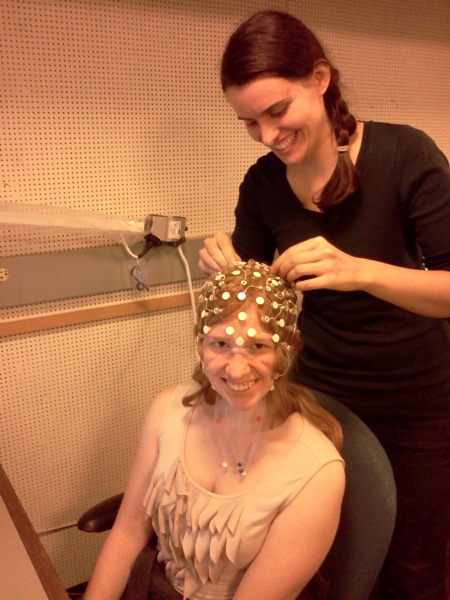
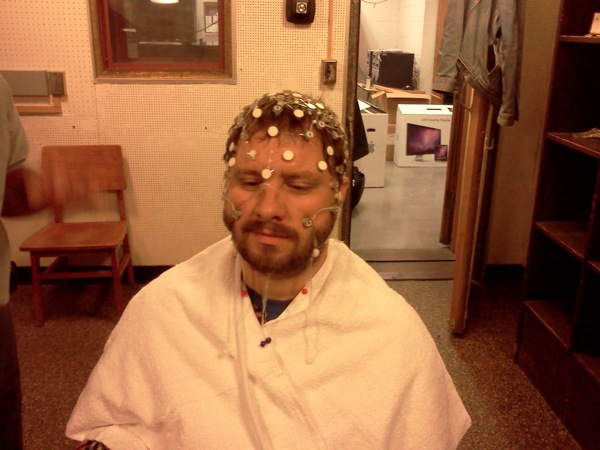
Here are two pictures of our Fall Semantics Guru, taken a few years apart in the same environment.
UMOP 38: Processing Linguistic Structure, edited by Jesse A. Harris and Margaret Grant is now available!
Here is how its advert blurb describes the volume:
This volume consists of a collection of working papers on sentence processing covering a wide range of topics, including pied-piping, ellipsis in adult sentence processing and acquisition, and processing effects associated with anticipating upcoming linguistic structure. Addressing numerous theoretical and experimental issues, papers in the volume may appeal to a wide audience interested in sentence processing.
Table of contents: http://www.people.umass.edu/harris/umop/UMOP38_toc.pdf
It can be purchased from the Graduate Linguistic Students' Association
http://glsa.hypermart.net/
"Locating Agreement in Grammar: An Argument from Agreement in Conjunctions" by Rajesh Bhatt and Martin Walkow has been accepted for publication by Natural Language and Linguistic Theory.
Congratulations!
Angelika writes:
You are cordially invited to a special lecture:
Quantification in Salish (and maybe Tsimshianic)
by
Henry Davis, University of British Columbia.
Time: Tuesday, November 1st at 2:30 PM.
Place: Bartlett 206.
John Kingston writes:
It's with great pleasure that I announce that we now have the capacity
in the Phonetics Lab to collect EEG/ERP data. We have a 64-channel
system from Electrical Geodesics Inc. (EGI), the same company that
manufactured the 128-channel system in Lisa Sanders's lab. The
engineer from EGI is here this week and is training a number of us in
the basics of how the system works.
So that any interested member of the department can get trained and
become at least self-sufficient in running experiments using this
system, if not yet expert, Brian Dillon and I are organizing a
training regime that will consist of two experiments, one looking at a
P-side question, the other at an S-side question. Our idea is to
design maximally simple experiments in each of these two areas, which
nonetheless either replicate a well-established effect or look to see
whether a novel manipulation has an effect. The experiments will be
very simple, so that we can focus on training people in the use of the
equipment and software.
If you are interested in taking part in the training, let me or Brian
know soon. Once we have heard from all interested people, we'll
schedule a brief meeting to set up a training schedule.
While experiments using this technology are not easy to do, you should
not be deterred from getting trained by that fact, if you think that
ms-resolution, real-time data on brain activity might provide answers
to the questions you're working on. With 64 channels, we can also do
rough localization of the activity.
Here's what the fun you can have with EEG/ERP looks like!
Graduate Conference on Areal Linguistics, Grammar and Contacts
Tartu, Estonia
4-6 May 2012
Call for papers: Deadline: 10.01.2012
We invite MA and PhD students, postdocs and young researchers in linguistics to submit abstracts related to the following themes:
- Contact-induced phonological, morphological, syntactic and lexical change
- Lexical and grammatical replication, shared grammaticalization
- Typological investigations and wider perspectives on linguistic areas
- Circum-Baltic languages in general
- Language contact and sociolinguistics
- Language contact and dialectal variation
- Globalization and its effect on minor(ity) languages
- Synchronic, diachronic and panchronic approaches to language contact and linguistic areas
Invited plenary speakers:
- Maria Koptjevskaja-Tamm, Stockholm University
- Axel Holvoet, University of Warsaw, Vilnius University
- Florian Siegl, University of Tartu
The working language of the conference is English. For further information, abstract submission and more, see http://arealling.ut.ee
There will be an Acquisition Lab/LARC meeting on Monday October 24 at 5:15
in the Partee Room. There will be two presentations:
Rama Novogrodsky
"Acquisition of each one/one each"
Barbara Pearson
"Distributive and Collective Readings in the Elementary School
Mathematics Classroom"
Everyone welcome!
Maziar Toosarvandani (http://toosarva.scripts.mit.edu/) from MIT will give a presentation in Rajesh Bhatt's syntax seminar on Wednesday, October 26, in Herter 208 at 2:30. The talk will be on the role of nominalization in relative clause formation, with a focus on his work on Paiute. (see:[http://toosarva.scripts.mit.edu/manuscripts.html and http://toosarva.scripts.mit.edu/papers/wscla16-paper.pdf)
For more information about the course: https://sites.google.com/site/umasslx750f11/
Maria Polinsky from Harvard University will this week's colloquium on Friday October 28 at 3:30 PM in Machmer E-37.
Title: Explaining syntactic ergativity
Abstract:
This paper shows that ergative languages fall into two separate classes, PP-ergative and DP-ergative languages. In PP-ergative languages, the ergative is contained inside a PP which prevents it from undergoing A-bar movement. This accounts for the widespread phenomenon of syntactic ergativity. DP-ergative languages allow the extraction of the ergative. The paper then presents and analyzes a cluster of properties associated with the two types. Under the principled division of ergative languages into the proposed two classes, the syntactic ramifications of ergativity are predictable and lead to a more uniform syntax.
Everyone is welcome to a post-colloquium dinner to be held at Alice Harris's house.
CALL FOR ABSTRACTS
15th Annual Harvard East Asia Society Graduate Student Conference
Harvard University, Cambridge, MA, USA
February 24 - February 26, 2012
The Harvard East Asia Society (HEAS) Graduate Student Conference invites graduate students from around the world, conducting research in all disciplines, to submit abstracts for our 2012 conference.
Over the past decade, East Asia has experienced unprecedented change, which has had an immense impact on every aspect of the region. As a result, scholars worldwide are exploring and engaging in meaningful discussion on every subject to do with East Asia, past and present.
The HEAS Graduate Student Conference is an annual event which provides an interdisciplinary forum for graduate students to exchange ideas and discuss current research on East Asia. The conference allows young scholars to present their research to both their peers and to eminent scholars in East Asian Studies. All panels will be moderated by Harvard University faculty. The conference will also allow participants to meet others in their field conducting similar research and to forge new professional relationships.
We welcome submissions from graduate students in all disciplines. Papers should be related to East or Inner Asia, including East Asian interactions with the wider world.
Eligibility and Application Guidelines:
1. Applicants must be currently enrolled in a program of graduate study ("postgraduate" in British degree classification systems).
2. Papers must be related to East or Inner Asia.
3. Abstracts must be no longer than 250 words, submitted exactly as directed on the HEAS Individual Paper Application Form.
4. Deadline for abstract submission: NOVEMBER 18, 2011
Inquiries:
For general conference inquiries, please contact: heasconference@gmail.com<mailto:heasconference@gmail.com>
For abstract submission inquiries, please contact: heas.abstracts@gmail.com<mailto:heas.abstracts@gmail.com>
--
Benjamin Herman writes:
The next Linguistics club meeting will be at 5pm, Wednesday November 2nd.
There is also an officers' meeting at 5pm, Wednesday October 26th, but all club members are welcome to join.
PIZZA AS ALWAYS!!!
If you need any assistance regarding club matters, or are looking for a hook-up to any kind of Linguistics study group for your next exam, feel free to contact us:
President: Jeremy Cahill jccahill@student.umass.edu
Vice President: Pratiksha Yalakkishettar pyalakki@student.umass.edu
Secretary: Benjamin Herman bsherman@student.umass.edu
Treasurer: Nathan Banker nbanker@student.umass.edu
Librarian: Emily Westland enicat@verizon.net
Webmaster: Samuel Baldwin sbaldwin@student.umass.edu
The 36th Penn Linguistics Colloquium
Call for Papers
The 36th Annual Penn Linguistics Colloquium will take place March 23-25, 2012 at the University of Pennsylvania campus in Philadelphia.
Invited Speaker: Paul Kiparsky (topic and title TBA)
There will also be a special panel on Friday, March 23, which is about game theory and linguistics. More information will be posted closer to the conference.
Papers on any topic in linguistics and associated fields are welcome. Speakers will have 20 minutes for their presentations and 5 minutes for discussion and questions.
Posters: We are happy to announce that this year's PLC will feature a poster session with catered lunch. Abstracts should indicate whether they are being submitted for consideration as a talk, poster, or both. (See instructions.)
Deadline: Abstracts are due Thursday, November 15, 2011. Notification of acceptance/rejection will be given by Wednesday, January 25, 2012.
Length: Please limit abstracts to one page, single-spaced. An additional page may be used for references and tables. Do not include your name or affiliation within the abstract.
Format: To facilitate the review process, please submit your abstract as a .pdf file.
Abstract Submission: To submit an abstract, you must follow these steps:
Proceedings: Conference proceedings will be published as a volume of the Penn Working Papers in Linguistics. Speakers will be invited to provide camera-ready copies of their papers after the Colloquium.
FOR MORE INFORMATION
Email plc36@ling.upenn.edu
Visit http://www.ling.upenn.edu/Events/PLC/plc36
Roger Schwarzschild, our resident guru, will give a talk entitled "Nouns as eventuality predicates and the mass/count distinction" in Angelika Kratzer's seminar this Tuesday, October 18th, at 2:30pm in Bartlett 206.
All are welcome!
The Linguistic Society of America gives, every year, its Early Career Award to "a new scholar who has made an outstanding contribution to the field of Linguistics." This year, our own Seth Cable has won this coveted award. WHISC has not determined whether Dr. Cable plans on being present at the gala awards ceremony at this year's LSA meeting in Portland, Oregon this January to receive the award.
We at WHISC join Sally Thomason, Chair of the Awards Committee, who offers "congratulations on the super-impressive record of scholarship and teaching that earned you this award!"
Roger Schwarzschild of Rutgers University will present the department colloquium this Friday at 3:30 in Machmer E-37. A title and abstract follow.
Quantifier Domain Adverbials, Semantic Change and the Comparative
The sentence “Jack is more anxious than Jill” is a comparative. We know that because of the presence of “more” as well as the presence of “than”. Across the world’s languages, there are expressions of the comparative that lack a morpheme comparable to “more” (comparative marker) and there are some that lack a morpheme comparable to “than” (standard marker). From this perspective, the comparative seems to be redundantly marked in the English example.
Where is the meaning of the comparative localized, in the more-word? in the than-word? in both? Is there a dependency between the grammar of the than-word in a given language and its use of a more-word (Stassen 1985)?
What is the process by which languages acquire a more-word over time?
In this talk, I will be looking at expressions of the comparative in Modern Hebrew. I’ll propose an analysis that makes use of Quantifier Domain Adverbialization. In this analysis, both the more-word and the than-word are meaningful. The phrase headed by the than-word can function as a Quantifier-Domain Adverbial whereby it comments on the domain of the degree quantifier more. I’ll address the questions raised above through the lens of the proposed analysis.
NELS 42 is being hosted by the University of Toronto this year on the weekend of November 11-13. The theme of the conference is: "The role of Typology and Linguistic Universals in Linguistic Theory." In addition to plenary talks by former UMass faculty David Pesetsky and Lisa Matthewson, other UMass notables presenting include:
Claire Moore-Cantwell "Over- and under-generalization in Learning derivational morphology."
Michael Becker (with Clemens and Nevins) "A richer model is not always more accurate: The case of French and Portuguese plurals."
Maria Gouskova and Michael Becker "Russian 'yer' alternations are governed by the grammar."
Gillian Gallagher "Speaker knowledge of laryngeal phonotactics in Cochabamba Quechua."
Stefan Keine "Long-distance agreement and movement: Evidence from Hindi"
Keir Moulton "What covaries in backward variable binding."
The deadline for early bird registration is this Tuesday: October 18. It looks like a smashing conference (NB: the party is to be held in the Bata Shoe Museum). More information at: NELS 42
In the October 9th issue of WHISC, it was reported that two UMass faculty (Lisa Selkirk and Angelika Kratzer) and one UMass alumnus (Irene Heim) were inducted into the list of Linguistic Society of America Fellows. Word has since reached WHISC that two other UMass faculty members -- John McCarthy and Alice Harris -- have joined those august ranks this year. Emmon Bach and Barbara Partee were among the inaugural Fellows in 2006 and, with the addition of Professors McCarthy, Harris, Selkirk and Kratzer UMass now has more LSA Fellows than any other University east (or west) of California.