29 January 2012

Kristine Yu speaks at University of Maryland

Kristine Yu will present "Morphosyntax-prosody mapping in Samoan," at the University of Maryland on February 3. An abstract follows.

Samoan is a Polynesian language with an ergative case marking system. While ergative and oblique case are marked segmentally, the absolutive case has been thought to be unmarked. I will present fieldwork data in Samoan supporting the hypothesis that absolutive case is marked by a lexical high tone, although this is not necessarily a one-to-one mapping, since high tones also mark other grammatical structures, as well as prosodic boundaries. I will discuss implications of this finding for prosodic typology and for the syntax-phonology interface.

Stefan Keine's paper on Switch Reference accepted to NLLT

Stefan Keine's paper "Deconstructing Switch-Reference," has just been accepted for publication in Natural Language and Linguistic Theory.

Congratulations Stefan!

Undergraduate Research Position in Speech Perception

Alexandra Jesse from Psychology writes:

We are currently looking for undergraduate research assistants to work in the Language, Intersensory Perception, and Speech (short: LIPS) lab in the Psychology Department. Positions are open starting this Spring semester. Ideal applicants are those who can commit to a longer time period.

The work within the LIPS lab falls within the area of Psycholinguistics. We examine how listeners recognize speech from hearing and seeing a speaker talk. In particular, we are interested in the time-course of recognizing words - both from listening and from lip-reading, how listeners adjust to a speaker's idiosyncratic pronunciations, and what happens to these processes when people get older. We use eye-tracking and other behavioral methods to address these questions, as well as EEG. 

You can visit our website for more information:
http://lips.psych.umass.edu

Typical tasks of our research assistants are:
- help with finding stimuli for an experiments (e.g., selecting words, making nonwords)
- help with recording, annotating, and editing of speech materials for the experiments
- assist with recruitment, scheduling, and testing of participants
- attend & prepare for weekly lab meetings
- do administrative research-related tasks

The typical commitment of our research assistants during the school year is 9hrs/week, for 3 credits. You would be enrolled in Psych 398B, but this course can count as an elective towards your linguistics degree. Please contact me if you have any questions about how these credits can be applied to your degree in Linguistics. 

So if you are interested in the position for the Spring, please contact me as soon as possible for more information and for an application form. Once you return the completed application form, we will then contact you to schedule for an interview. We will then also require a letter of recommendation. Enrollment has to be completed by Thursday, February 2nd.

Barbara Pearson presents at the LARC/Acquisition Lab Meeting on Monday

The first meeting of LARC and the Acquisition Lab this semester will be tomorrow, Monday January 30th, in the Partee Room (South College 301) at 5:15PM. Barbara Pearson will present her paper co-authored with UMass alumna Miren Hodgson "A Test of Chidren's Knowledge of A-Chains: Preschoolers learning Spanish verbs with 'se' ."

Deadline for Abstracts to GLEEFUL 2012 extended

The Deadline for submissions to the Great Lakes Expo for Experimental and Formal Undergraduate Linguistics (GLEEFUL) has been extended to February 5th (next Sunday). GLEEFUL will happen on April 21 at Michigan State University, and the keynote speaker is former UMass faculty, David Pesetsky.

More information is available at: https://sites.google.com/site/gleeful2012/

Call for Papers: Undergraduate Conference at University of Toronto

The University of Toronto is proud to host TULCon (Toronto Undergraduate Linguistics Conference) 2012! It will be held March 2-4, 2012.

Abstracts can still be submitted for consideration until February 10, 2012. If you are an undergraduate or a graduate student who has yet to begin a graduate program, please consider applying! We consider every abstract, as long as it's linguistics-related.

For more information, please see http://homes.chass.utoronto.ca/~slugs/?s=tulcon2012 or email tulcon2012@gmail.com.

Christopher Garry is awarded Commonwealth College grant

Christopher Garry, an undergraduate majoring in Computer Systems and Engineering, has been awarded a $1000 grant by the Commonwealth College to study "Larynx Displacement during Speech Utterances." John Kingston's description of Mr Garry's grant follows.

Chris Garry received a $1000 research grant from the Commonwealth College for building a system to record vertical movement of the larynx during speech. Movement is recording using a Casio EX-F1 camera that can capture up to 1200 frames per second, although just 300 fps is more than enough for recording the relatively slow movement of the larynx. The system Chris is building processes these images in Matlab to measure changes in the height of the larynx as the person speaks and synchronizes these measurements with an audio recording of their speech. The height of the larynx in the neck varies directly with the pitch of the speaker's voice -- larynx lowering appears to be the principal mechanism for lowering pitch -- and with their regulation of the volume of the oral cavity to control air pressure inside it -- larynx lowering is at least the second most important means of expanding the oral cavity and reducing pressure. Chris is a computer engineering major who came to the Phonetics Lab last spring with an interest in getting practical research experience. He will present the results of this project at the Undergraduate Research Conference later this spring.

Congratulations!

Michael Becker speaks at McGill

Michael Becker will present "Universal Grammar protects Initial Syllables" at McGill University on Monday, Jan. 30. An abstract of his talk follows.

In English, voicing alternations (e.g. knife ~ knives) impact mostly monosyllables, while polysyllables are rarely impacted.  The opposite is true of French: most monosyllables that end in [al] keep their base faithful under affixation (e.g. bal ~ bal ‘ball(s)’), while most polysyllables tolerate a stem change (bokal ~ boko‘jar(s)’).  In this talk, I examine the two types of languages, and show that the symmetry is only superficial. The French trend is accessible to the grammar and extends readily to novel words, whereas English speakers treat novel words the same regardless of size. In other words, English speakers fail to find the generalization (the surfeit of the stimulus, Becker et al. 2011).

Positional faithfulness, and in particular, initial syllable faithfulness explains this asymmetry: The [al] in bal is protected by initial syllable faithfulness and by general faithfulness, while the [al] in bokal is protected by general faithfulness only. English goes against the Universal bias, requiring monosyllables to be less faithful than polysyllables. But with general faithfulness highly ranked, the ranking of initial syllable faithfulness is irrelevant, and the speakers are blocked from forming the required generalization.

Having established the asymmetry in the novel word tasks, we press English speakers further and ask them to learn unfamiliar morphophonological alternations (e.g. miːp ~ miːb-ni). Unencumbered by the counter-typological nature of actual English, speakers revert to Universal Grammar, and exhibit the French pattern.

This line of investigation, which goes from real words to novel words and from novel words to novel alternations, allows us to trace the biases that humans use in the phonological organization of their lexicon, and allows us to expose behavior that roundly contradicts the ambient language, yet conforms to the trends we see in the world’s languages.

22 January 2012

Anne Pycha gives McGill colloquium

Anne Pycha was the colloquium speaker at McGill on Friday, January 20th. She delivered "Phonological signatures in words: Evidence from production and perception of diphthongs."  The abstract of her talk follows.

Abstract

This talk wrestles with two big problems that face phonology. First, non‐local dependencies in phonology are not widely attested, despite the fact that they are common at other levels of linguistic analysis, such as syntax. Second, many phonological processes bear close resemblance to phonetic processes, suggesting that no real difference exists between abstract phonological structures and the physical events of articulation. In this talk, I pursue the hypothesis that phonologically contrastive processes exhibit acoustic “signatures” that are a) non‐local and b) absent from otherwise similar phonetic processes. Experiment 1 demonstrates that English speakers produce non‐local dependencies in order to maintain contrast between words such as bite vs. bide, but not in order to accomplish other tasks, such as changing speech rates or signaling phrasal positions. Experiments 2 & 3 demonstrate that English listeners can use these dependencies to perceptually distinguish between words like bite vs. bide, even in the absence of other cues. The upshot of these findings, which build on previous work that I have done in Hungarian, is that phonology does use non‐local dependencies, and these dependencies crucially distinguish it from phonetics. I analyze non‐locality in both languages as motivated by a need to target maximal segments, and I examine the implications of this analysis for cross‐linguistic typology.

The Psycho/Syntax Lab starts up on February 3

Brian Dillon and Rajesh Bhatt write:

The Psycho/Syntax lab meeting rides again for the Spring Semester! Like last semester, we'll be meeting biweekly throughout the semester to discuss the wide variety of syntactic projects going on around the department (theoretical, experimental, both). The tentative first date for the first meeting is Friday, February 3rd at 10AM, in the Partee room. We'll use this meeting to do some planning for the upcoming semester, including finding a regular time when everyone can meet; if you cannot make this first planning meeting, let us know what times you can meet during the semester. 

In this first meeting we'll also get to hear about some interesting new work from Stefan, who will talk to us about some neat data on Hindi coreference restrictions that he's been working on. Anyone who has a project of any sort that they're interested in presenting at the lab meetings should get in touch with us (before we come looking for you...). The format is *strictly informal*, and so incomplete analyses, messy data, and ideas that aren't yet fully baked are very much welcome! In particular, projects that are just in their infancy, and which would benefit from group discussion, would make for very good discussion.

Becker and Lima teach at Evelin 2012

Michael Becker and Suzi Lima taught a couple of courses over Winter break at the Summer School in Formal Linguistics at UNICAMP in Brazil. Michael Becker taught "Morfofonologia computacional e experimental (Computational and Experimental Morphophonology," and Suzi Lima taught Tópicos em Semântica II (Topics in Semantics II): A distinção contável/massivo através das línguas: aspectos semânticos e experimentais (The count/mass distinction cross-linguistically: semantic and experimental aspects).

You can learn more about Evelin at http://evelin2012.wordpress.com/

Call for Papers: Formal Approaches to Heritage Language

Conference on Formal Approaches to Heritage Language
April 20-21, 2012

Sponsored by the Language Acquisition Research Center (LARC) of the University of Massachusetts Amherst

“Heritage speakers” have been described by Polinsky and Kagan (2007) as people raised in a home where one language is spoken, but who subsequently switch to another dominant language.  This conference aims to explore the formal properties of Heritage Speaker grammars and where they diverge from both native “baseline” and L2 speaker grammars. The program will also include a workshop on research techniques for heritage languages.

Invited speakers:

Ana Perez-Leroux, University of Toronto

Acrisio Pires, University of Michigan

Maria Polinsky, Harvard University

Abstracts for presentations or posters are solicited on both theoretical and acquisition issues that connect Heritage to L1 or L2 research.

Priority will be given to work that addresses specific theoretical domains, such as, but not limited to:  aspect, binding, quantification, and movement and more specifically, agreement, case, tense, and mood.

Talks will be 20 minutes long, with 10 minutes for discussion. Abstracts should be one page, font size 12 pt., with one-inch margins. A second page may (optionally) be used for examples, tables or graphs, and references. In order to maintain anonymity during the review process, please do not include your name or otherwise identify yourself anywhere in your abstract.

Abstracts should be sent by email in pdf format to bpearson@research.umass.edu. Please use ‘abstract submission’ as subject heading.  The body of the message should include the author’s name(s), title, and contact information.

For more information about the call or the conference, contact the organizers: Tom Roeper, Luiz Amaral, or Barbara Zurer Pearson ( roeper@linguist.umass.eduamaral@spanport.umass.edu orbpearson@research.umass.edu )

Abstract deadline: February 29, 2012 (midnight EST)

Notification of acceptance: March 10, 2012

Workshop dates: April 20-21, 2012

Martin Walkow's paper accepted at Arabic Linguistics Symposium

Martin Walkow's paper: "Restrictions on Pronoun Combinations and a Parallelism between Subject Agreement and Cliticization in Classical Arabic" has been accepted for inclusion at the 26th Arabic Linguistics Symposium, March 1–3 in New York.

Congratulations Martin!

McCarthy a finalist for the Vice Provost for Graduate Education and Dean of the Graduate School

The search committee for the position of Vice Provost of Graduate Education and Dean of the Graduate School has announced that there are two finalists for the position, one of which is our own John McCarthy. See the announcement here.

Congratulations John!

The UMass contingent at ICPP in Kyoto

John Kingston writes:

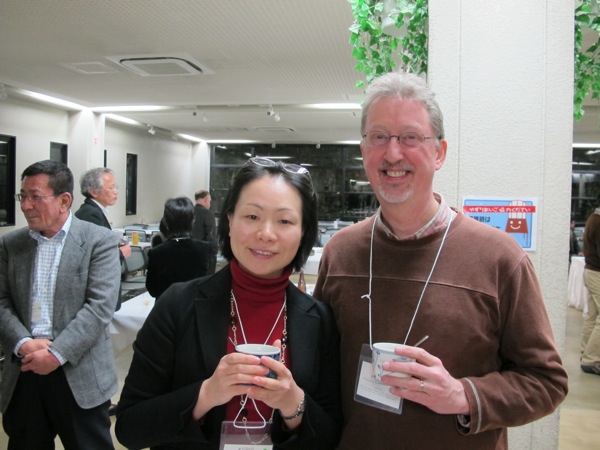
Attached are pictures of UMass folks participating in the International Conference on Phonetics and Phonology organized by the National Institute for Japanese Language and Linguistics and held at the University of Kyoto, 10-14 December 2011. It was very long, but also very stimulating, with many papers focusing on Rendaku, sokuon (geminates), and prosody, and as you can see with participation by a number of people from UMass.

Jk 3

Shigeto points

Mariko explaining

Shigeto amused

Shigeto with otake

Junko armin jk with shigeki kaji 2nd degree black belt karate


Mariko sugahara and jk

16 January 2012

Tanja Heizmann defends dissertation on January 18

Tanja Heizmann will defend her dissertation, "Acquisition of Exhaustivity in Clefts and Questions and the Quantifier Connection -- A Crosslinguistic Study of English and German" on Wednesday, January 18, at 3PM in Bartlett 206.

Congratulations Tanja!

Call for abstracts: Undergraduate Conference

The q Undergraduate Association for Linguistics at Michigan State (qUALMS) is pleased to announce the Great Lakes Expo for Experimental and Formal Undergraduate Linguistics (GLEEFUL). GLEEFUL will be held on April 21, 2012 in East Lansing, Michigan.

Keynote Speaker: Dr. David Pesetsky
Massachusetts Institute of Technology

GLEEFUL aims to bring together undergraduate linguists from across the continent to present high-quality research to their peers in order to gain experience and a greater appreciation for the many ways to study linguistics and language-related fields.

We invite 1 page abstracts (500 words) for 10 minute presentations or posters from any area of linguistics. Abstract submission and registration will all be done electronically through our website, available through https://sites.google.com/site/gleeful2012/.

Deadline for submission of abstract: January 22, 2012.
Abstracts will be reviewed, and participants will be notified starting on February 26, 2012.

For further information, you can send an email to gleeful.2012@gmail.com, or check out the GLEEFUL website.

05 January 2012

Call for Abstracts: Modality Workshop in Ottawa

Ana Arregui from Ottawa University writes:

We will be hosting a modality workshop on April 20-21.  We have extended the abstracts deadline to January 30.

Here is the link to the conference website:
http://modalityatottawau.blogspot.com/2011/10/call-for-papers.html

(Note: Angelika Kratzer is an invited speaker!)

Call for Papers: Societas Linguistica Europaea

The Workshop Convenors write:

We are happy to inform you that we are organizing a workshop on "Meaning and form of vagueness: a cross-linguistic perspective" at the 45th Annual Meeting of the Societas Linguistica Europaea (Stockholm, 29 August-1 September 2012, www.sle2012.eu).

The description of the workshop, research directions, and a non-exhaustive list
of possible topics are available on the workshop website:
https://sites.google.com/site/workshopvagueness2012

Abstracts should be submitted to the SLE by 15 January 2012 via the conference
site (http://www.sle2012.eu/), specifying that the abstract is intended as an
“Oral Presentation” in our workshop.

Abstracts should be anonymous and contain between 400 and 500 words (exclusive
of references). They should state research questions, approach, method, data
and (expected) results. Notification of acceptance will be given by 31 March
2012.

If you have any questions, please do not hesitate to contact us at
workshop.vagueness2012@gmail.com

Call for Applications: NSF Funded Joint Conference

In association with the Cognitive Science Society, the US National Science Foundation hopes to fund up to eight conference grants/research fellowships to US citizens who are enrolled as students at a US institution.  The funds will support students to both attend the 34th Annual Conference of the Cognitive Science Society (CogSci2012) and to participate in a collaborative research project with a sponsoring institution in Japan.  The award will provide funds for travel, accommodations, and registration fees for the conference and for a short stay (3 to 4 days) at a relevant Japanese institution immediately prior to or after the conference to work on the project.  The number of awards will be based on available funds and the scientific merit of the submitted proposals.

Confirmed collaborating hosts/institutions include:

Hiroshi Motoda, Osaka University.
Research areas: Artificial Intelligence, Machine Learning, Data Mining, Knowledge Discovery, Scientific Discovery, Expert Knowledge Acquisition
http://www.ar.sanken.osaka-u.ac.jp/~motoda/motopreg.html

Naomi Miyake, University of Tokyo.
Research areas: Learning sciences, Collaborative Problem Solving, Robotics for CSCL, Learning Process Analysis
http://coref.u-tokyo.ac.jp/en

Other potential host institutions in Japan include:

National Institute of Advanced Industrial Science and Technology
Center for Experimental Research in Social Sciences, Hokkaido University
http://lynx.let.hokudai.ac.jp/cerss/english/index.html

Advanced Telecommunications Research Institute at Kyoto/Osaka
Primate Research Institute, Kyoto University at Inuyama, Nagoya
http://www.pri.kyoto-u.ac.jp/index.html

The application process is as follows:

All eligible applicants who wish to apply should submit a one page proposal outlining the project on which they wish to work.  The deadline for this is February 1, 2012.  This outline may specify a collaborating institution, but need not.  Institutions not listed above will be considered if the applicant can provide the name of a suitable and willing academic collaborator at such an institution.  In addition to the proposal, applicants should provide indicative costs.

From the applicants, a subset will be identified by March 1 whose interests overlap sufficiently with those of a lab sponsor in Japan.

The student and lab sponsor will coordinate to plan a small research project that will include a visit to the lab before or after the conference in Sapporo.

With guidance from the sponsor, the student will submit a final proposal for review by the Selection Committee on or before May 1, 2012.

The Selection Committee will review and choose up to eight projects to support, based on student academic merits, potential impacts on students' education and research goals, financial need, and fundingavailability.  Awards will be announced on June 1, 2012.

Students will only be considered if they have submitted a paper to the CogSci2012 conference and if that paper is accepted for oral
presentation.

Interested students should submit their applications to: CogSci.2012.sapporo@gmail.com.