24 February 2013

LARC meeting tomorrow

Magda Oiry writes:
 
Please join us this Monday, February 25, in the Partee Room (South College 301) at 12:05 for a new LARC acquisition lab meeting.
 
Here is the detailed program:
 
1. Hristo Kyuchukov ---our former visitor and collaborator will give us a brief update on his efforts to create a language disorders test for Roma children in Eastern Europe
 
2. Tom Roeper and Luiz Amaral will seek from everyone whatever suggestions they have for instances where Transfer occurs and crucially where it does not occur in L2 and bilingualism.
 
3.  Tom Roeper will outline an experiment on: Do children have restrictions on Wide-Scope quantifiers in Nominalizations (work with Masaaki Kamiya and Angeliek van Hout).
 
Any questions to Magda, moiry@linguist.umass.edu.

Everyone welcome!

Phonetics Lab meeting on Tuesday

John Kingston writes:

The next Phonetics Lab meeting will be held Tuesday, 4-5:30, 26 February 2013. The usual sustenance and refreshment will be provided, spiced with all the gory details of on-going experiments. It's also time to put your best face forward, as we'll be taking head shots to post on the lab's new website.

Vincent Homer gives colloq on Friday

On Friday, March 1, Vincent Homer (École normale supérieure) will give a colloquium entitled "Polarity and Grammar." The talk is at 3:30 in Machmer E-37. An abstract follows.

The licensing of polarity items is an old and difficult problem. It is hard to find the exact conditions that govern the distribution of those elements (e.g. some, any), not simply due to the intrinsic complexity of the patterns, but also because it is not even clear whether one should look for conditions couched in syntactic or semantic terms.

The discovery, due to the seminal work of Fauconnier (1975) and Ladusaw (1979), that downward-monotonicity is a characteristic property of the set of expressions whose presence can make an NPI acceptable (e.g. any in (1)), was a breakthrough which could have decisively tipped the scales in favor of a semantic approach.

(1) John didn’t understand anything.

That is, it could have become universally accepted that an NPI is only acceptable in a sentence S if it is in a position within S in which downward inferences are supported. But in fact, a vast majority of researchers who work on the topic view licensing essentially as a syntactic relation between a polarity item and an operator equipped with a certain negative feature, and do not take the monotonicity of the environment of the NPI as a direct factor. There is at least one good reason that supports their move: adding a negative expression to (1) does not lead to anti-licensing (2), as might be expected on strictly semantic grounds, given the monotonicity reversal; the acceptability of (2) is expected on the other hand if all that any requires is a structural relation with at least one appropriate operator above it:

(2) It is impossible that John didn’t understand anything.

In this talk, I propose a general account of licensing, both for NPIs and PPIs, which goes against the grain of the dominant syntactic approaches, as it maintains that polarity items are directly sensitive to the monotonicity of their environment. The theory, which relies on a few simple principles, also accounts for a number of unnoticed facts, and sheds new light on the dedicated mechanisms which evaluate the acceptability of polarity items, and on their interaction with other interpretative processes.

Aleksei in Amherst Choral Society

Alex writes:

Colleagues! I will be performing with the Amherst College Choral Society (and Symphony Orchestra) for the last time this upcoming March 2 at 8:00 PM. The concert will take place at Buckley concert hall on the Amherst College campus (tickets will presumably be $15, or $5 (for five college students)). We will be singing the magnificent Lord Nelson Mass (Missa in angustiis) by Joseph Haydn; the program will also feature the Tragic Overture by Johannes Brahms. Come and support good choral singing, and enjoy the beautiful music!

Vincent Homer gives talk on Thursday

On Thursday, February 28, Vincent Homer from the École normale supérieure-Paris will give a talk at 4:00 in Machmer W-27. His talk is entitled "Escape!" and an abstract follows:

Escape!

Modal verbs have intriguing scopal properties, which have received relatively little attention in the semantic literature. Compare can and must (both interpreted deontically):

(1) John can’t jog.
(2) John mustn’t jog.

If we are right to treat can as having existential force and must as having universal force, there is a puzzle: can takes obligatory narrow scope in (1), while in the exact same frame, must takes obligatory wide scope (2). This talk has one main goal: show that the contrast is due to a movement–I label it escape–which only certain modals can undergo. In the case at hand, it is must that moves because it is unacceptable in a negative environment, while can doesn’t move, because it has no reason to do so. I will study escape in detail, (i) because it has properties that set it apart from other known displacements, viz it is motivated by polarity and it is a last resort, and also (ii) because of the original light it sheds on modals and on the interplay of syntax and semantics in the mechanism of polarity item licensing.

UMass in NLLT

The most recent issue of Natural Language and Linguistic Theory contains the article "Passivization, reconstruction and edge phenomena: connecting English and Japanese Nominalizations," by Angeliek van Hout, Masaaki Kamiya and Tom Roeper.

Postdoc on discourse particles in Stuttgart

Post Doc, full time, 12 months
Location: University of Stuttgart, Germany
Email: cornelia.ebert AT ling.uni-stuttgart.de

We invite applications for one post-doc position in theoretical linguistics (semantics/pragmatics) at the University of Stuttgart, Germany, available from May 1st. The position is for 1 year. Salary is according to the German TV-L E13 scale. 

The candidate will contribute to the project C4 of the Sonderforschungsbereich (collaborative research center) 732,
(http://www.uni-stuttgart.de/linguistik/sfb732/), 'Incremental Specification in Context'. The project investigates discourse particles and their interpretation in context.

Desired qualifications:

- Ph.D. in Linguistics or a closely related field
- Specialization in/interest in formal semantics and pragmatics

We offer the opportunity to work on cutting-edge research projects in a dynamic and international research team with up-to-date infrastructure and resources. English is the working language; nevertheless, an ability to speak, or willingness to learn, German is appreciated.

Please send inquiries and applications to Cornelia Ebert by March 15, 2013 (see contact information below). Applications should be in PDF format and include a CV, a list of publications and the names of two references.

The University of Stuttgart is committed to increasing the proportion of women in research and teaching. Qualified women are encouraged to apply. According to German law, disabled candidates with equal qualification will be given preference.

Application email: cornelia.ebert AT ling.uni-stuttgart.de

Contact information

Dr. Cornelia Ebert
Department of Linguistics/Germanic Studies
http://www.uni-stuttgart.de/ilg
cornelia.ebert AT ling.uni-stuttgart.de

UMass in Language and Linguistics Compass

The latest issue of Language and Linguistics Compass has a couple articles by current and former members of the UMass linguistics community:

"Two Views on Epistemic Indefinites" by Louis Alonso-Ovalle and Paula Menendez-Benito

and

"Pied-Piping: Comparing Two Recent Approaches" by Seth Cable

Check them out: http://onlinelibrary.wiley.com/journal/10.1111/(ISSN)1749-818X

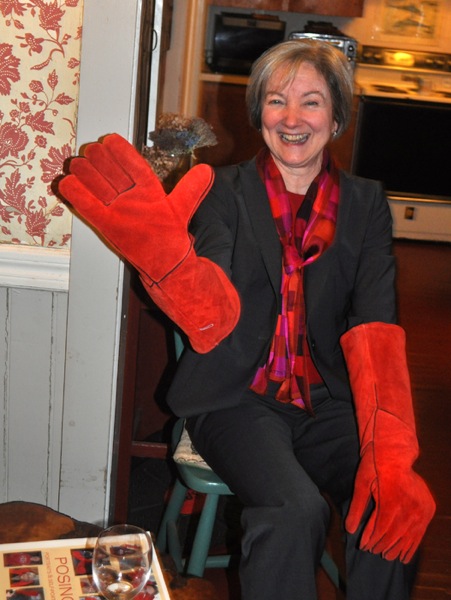
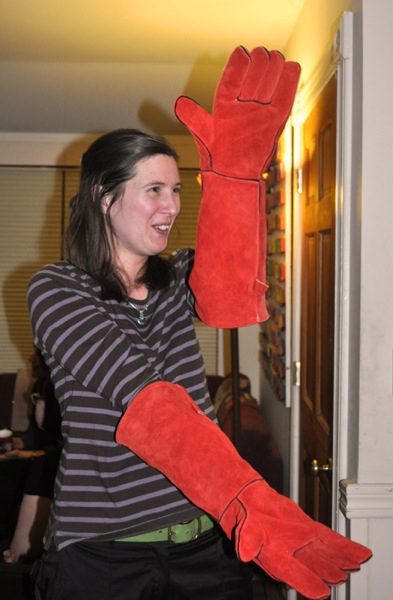
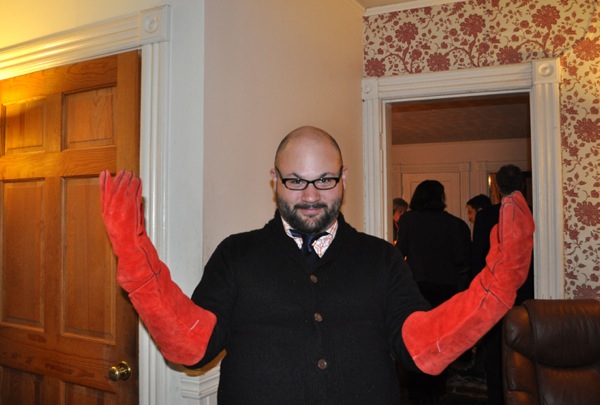
A red glove event at Tom and Laura's

Jeremy

Lisa

Rajesh

Lyn

Brian

Alice

Elizabeth

John

Kristine 2

Magda 2

Seth

Floris

Joe


Call for papers: Phonetics and Phonology in Iberia

The link below will take you to the second call for papers of PaPI 2013. The conference website can also be found at http://ww3.fl.ul.pt/laboratoriofonetica/papi2013/ .

17 February 2013

Floris Roelofsen gives presentation on Thursday

Floris Roelofsen will present "An inquisitive perspective on meaning: the case of disjunction" on Thursday, February 21 at 4:00 in Machmer W-27. An abstract follows.

A primary function of language is to allow for the exchange of information through a process of raising and resolving issues. To model this process, it is useful to have a notion of meaning that captures both informative and inquisitive content. This talk presents such a notion of meaning, and illustrates its advantages with respect to the classical, purely informational notion, focusing on the case of disjunction. The first part of the talk shows how the two main existing views on disjunction can be reconciled adopting an inquisitive perspective on meaning. The second part of the talk presents a uniform analysis of disjunctive questions and assertions in English, paying special attention to differences in form (e.g. declarative vs interrogative) and intonation (e.g. final rise vs final fall).

Floris Roelofsen gives colloquium on Friday, Feb. 22

Foris Roelofsen will present "Polarity Particles," in the department colloquium on Friday, February 22, at 3:30 in Machmer E-37. An abstract follows.

Polarity particles—words like yes and no—play a basic role in communication, and yet, their interpretation and distribution gives rise to a number of intriguing puzzles. This talk seeks to deepen our understanding of polarity particle systems cross-linguistically, revealing both their common core and the ways in which they vary from language to language. This investigation also has wider implications for linguistic theory, since polarity particles offer a valuable window onto the semantics of polar questions and assertions, which both license polarity particle responses. The common semantic core of polar questions and assertions is captured within the framework of inquisitive semantics. Subsequently, the account is extended to capture more involved patterns in the distribution of polarity particles, in particular in response to negative questions and assertions. The main predictions of the account concerning English are corroborated experimentally, and the cross-linguistic predictions are substantiated by data from German, French, Romanian, and Hungarian.

P Reading Group meets on Tuesday

Claire Moore-Cantwell writes:

We will meet Tuesday night to have a discussion about constraint  induction.  Everyone who works on constraint induction, come prepared to  talk a little bit about what you do; all others come with  questions/discussion points if you've got them.

Location: Kristine's place. 
Time:  8pm on Tuesday 19 February

Suzi Lima at Harvard

This Tuesday, February 19th, Suzi Lima will present a talk in the Language and Cognition Group entitled "Individuation and Counting in Yudja Tupi."

Lisa Sanders talks on Friday

Lisa Sanders will be presenting a talk on ERP measures of phonological learning in an artificial language on Friday, Feb. 22, at 9:30 in Tobin 423.

All are welcome!

Newton International Fellowships Announced

New Round of Newton International Fellowships Announced

A new round of Newton International Fellowships - an initiative to fund research collaborations and improve links between UK and overseas researchers - has now opened. The Newton International Fellowships are funded by the British Academy and the Royal Society and aim to attract the most promising early-career post-doctoral researchers from overseas in the fields of the humanities, the natural, physical and social sciences.

The Fellowships enable researchers to work for two years at a UK research institution with the aim of fostering long-term international collaborations. Newton Fellows will receive an allowance of £24,000 to cover subsistence and up to £8,000 to cover research expenses in each year of the Fellowship. A one-off relocation allowance of up to £2,000 is also available. In addition, Newton Fellows may be eligible for follow-up funding of up to £6,000 per annum for up to 10 years following completion of the Fellowship to support activities which will help build long-term links with the UK. The scheme is open to post-doctoral (and equivalent) early-career researchers working outside the UK who do not hold UK citizenship.

Applications are to be made via the Royal Society’s online application system which is available at https://e-gap.royalsociety.org/

The closing date for applications is Wednesday 10 April 2013. Further details are available from the Newton International Fellowships website: www.newtonfellowships.org

The British Academy
10-11 Carlton House Terrace, London SW1Y 5AH
020 7969 5200 britac.ac.uk

Mike Terry and Mako Hirotani in the news

www.tinyurl.com/KinstonLanguageStudy

Cable's papers virtually appear

Seth Cable's paper "Reflexives, Reciprocals and Contrast," has appeared in the electronic version of Journal of Semantics. And his paper "Beyond the Past, Present and Future: Towards the semantics of 'graded tense' in Gikuyu" has appeared in the electronic version of Natural Language Semantics.

WCCFL

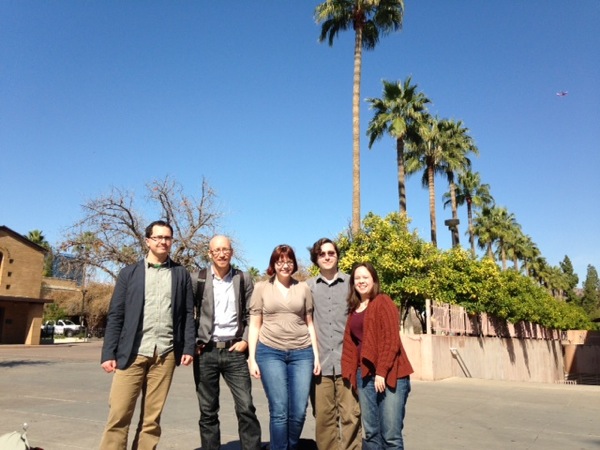
The West Coast Conference in Formal Linguistics met  in Tempe Arizona last weekend. UMass was well-represented. The following present and past students gave papers:

Chris Davis
Martin Walkow
Robert Staubs
Anisa Schardl
Elizabeth Bogal-Allbritten
Min-Joo Kim
Shigeto Kawahara
Satoshi Tomioka
Kyle Rawlins
Bern Samko
 
Junko Shimoyama and Luis Alonso-Ovalle were also scheduled to give a talk, but the Winter storm trapped them in Montreal.
 
You can see more at:


Elizabeth Bogal-Allbritten has sent partial proof:
 
Wccflphoto
 
(NB: This was the same weekend that 20 inches of snow fell upon the Happy Valley.)

10 February 2013

Lisa Green talks at Yale on Friday

Lisa Green gives a talk this Friday, February 15, at Yale University entitled "Aspect, Events and Variation."